Lumetra
China’s 40G QSFP+ transceiver market is mature, but it still serves real network needs. Enterprise data centers, campus backbones, and storage networks may retain 40GbE links where a full upgrade would add cost without clear benefit. The category is not obsolete. That distinction matters.
Scale provides useful context. Synergy Research Group reported that the number of hyperscale data centers worldwide passed 1,000 in 2024, reflecting continued investment in large-scale computing infrastructure. This figure is global, not China-specific, and does not measure 40G module demand directly. It does, however, show why buyers need dependable, compatible optical components. The IEEE 802.3 standard also defines distinct 40GbE optical interfaces, including 40GBASE-SR4 for multimode fiber and 40GBASE-LR4 for single-mode links. They are not interchangeable choices.
This guide to the top 40G QSFP+ transceiver manufacturers in China should be read as a sourcing starting point, not a definitive ranking. Manufacturers can differ in reach options, DOM support, coding, testing, warranty terms, and interoperability with specific switches. A polished specification sheet is useful; a tested module in the intended platform is better. Ask for test conditions, compatibility evidence, and clear return procedures. Small details count. One caveat remains: published product claims are not always independently verified, so buyers should confirm critical specifications before ordering.
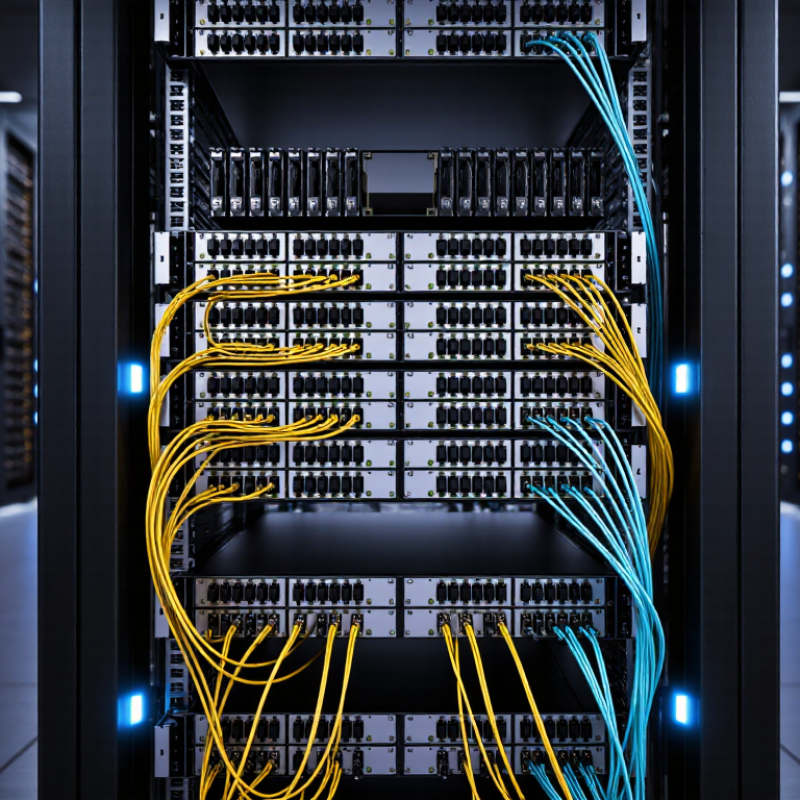
A 40G QSFP+ link is not a single 40 Gb/s optical stream. It divides transmission across four lanes, each operating at a nominal 10 Gb/s. IEEE 802.3ba-2010 specifies 40GBASE-SR4 lane signaling at 10.3125 Gb/s, including encoding overhead. Four lanes. One link. In SR4 optics, four fibers carry signals outward and four carry them back. IEEE’s reach figures are 100 metres over OM3 multimode fiber and 150 metres over OM4. Those distances make SR4 useful for short data-center connections, where parallel fiber can be practical.
The module’s electrical interface also uses four lanes, so host equipment must support lane mapping and alignment. The QSFP+ MSA defines the module form factor and interface requirements; it does not make every implementation identical. In real installations, connector cleanliness and fiber polarity matter. A tiny contaminant on an MPO end face can weaken one lane while the others still appear healthy. That is easy to overlook. Engineers should check each lane’s optical power and error counters, not just the aggregate link status. And the simple “four times ten” explanation leaves out encoding and signal-integrity limits; it is a useful starting point, not the whole design.
For 40G QSFP+ selection, reach is not a vague marketing label. IEEE 802.3ba-2010 defines the key Ethernet interfaces and their operating limits. 40GBASE-SR4 supports short-reach links over multimode fiber: up to 100 meters on OM3 and 150 meters on OM4. It sends data across four lanes, so the fiber connector and polarity must match the equipment at both ends. Small details matter.
For longer links, 40GBASE-LR4 reaches up to 10 kilometers over single-mode fiber, according to the same IEEE specification. The “4” refers to four optical lanes, not four kilometers.
For a short equipment-rack connection, 40GBASE-CR4 uses twinax copper and reaches up to 7 meters; it is not an optical reach class. These figures are useful planning limits, not a promise that every installed link will perform flawlessly. Connector loss, patch panels, and fiber condition can reduce the margin. Ethernet Alliance roadmap materials track the evolution of Ethernet speeds, while IEEE 802.3ba remains the primary reference for these 40G reach definitions. The naming can still trip people up. Verify the interface type, fiber grade, and link budget before choosing a QSFP+ module.
A useful way to classify China’s 40 leading QSFP+ manufacturers is by product breadth, not by a single headline specification. Broad-line suppliers may offer 40G SR4, LR4, and PSM4 modules alongside direct-attach copper cables and active optical cables. Their catalogs suit buyers comparing several link types for switches, server racks, and campus networks. Check the details.
A second group focuses mainly on optical transceivers. Compare supported reach, fiber type, connector, wavelength, and digital diagnostic monitoring rather than relying on “40G” alone. A third group specializes in cabling products, including short-reach copper assemblies and AOCs for links between nearby devices. Some suppliers span both categories, so the boundaries are not perfectly clean.
For a fair comparison, record each manufacturer’s documented product families, operating temperature range, and stated compatibility process. Request datasheets and test evidence for the exact part number under review. Small details matter: a connector type or reach limit can change whether a module fits a planned link. This classification is practical, but it is not a quality ranking; verify samples and support before drawing conclusions.
A product-range classification guide for comparing 40G QSFP+ offerings. It describes recognized interface types and adjacent cable products; it is not a verified ranking of 40 manufacturers.
| Product Range | Transmission Medium | Optical / Lane Configuration | Connector | Typical Reach or Distance Limit | Common Use and Classification Notes |
|---|---|---|---|---|---|
| 40GBASE-SR4 | Multimode fiber | 850 nm; four parallel lanes, approximately 10 Gb/s per lane | MPO/MTP-12 | Up to 100 m on OM3 or 150 m on OM4 | Short-reach data-center links. A common QSFP+ option for parallel-fiber connections. |
| 40GBASE-CSR4 | Multimode fiber | 850 nm; four parallel lanes | MPO/MTP-12 | Commonly specified up to 300 m on OM3 or 400 m on OM4 | Extended-reach parallel multimode option; confirm the module specification and supported fiber grade. |
| 40GBASE-LR4 | Single-mode fiber | Four LAN-WDM optical lanes in the 1310 nm region, multiplexed onto one fiber pair | Duplex LC | Up to 10 km | Long-reach links between switches, routers, and data-center locations. Defined by IEEE 802.3. |
| 40GBASE-ER4 | Single-mode fiber | Four LAN-WDM optical lanes in the 1310 nm region, multiplexed onto one fiber pair | Duplex LC | Up to 40 km | Extended-reach connections. Link budget and interoperability should be checked for the specific module. |
| 40G PSM4 | Single-mode fiber | Four parallel 1310 nm lanes, typically one transmit and one receive fiber per lane | MPO/MTP-12 | Commonly up to 500 m | Parallel single-mode links. PSM4 is an MSA-defined interface rather than an IEEE 40GBASE-LR4 variant. |
| 40G BiDi | Multimode fiber | Two optical wavelengths transmitted in opposite directions over each fiber | Duplex LC | Depends on the module and multimode-fiber grade; commonly intended for short data-center links | Can use existing duplex multimode cabling instead of a parallel MPO fiber plant. Check wavelength, reach, and endpoint compatibility. |
| 40G SWDM4 | Multimode fiber | Four wavelengths multiplexed over a duplex fiber pair | Duplex LC | Depends on the SWDM implementation and fiber grade | Short-reach option designed to use duplex multimode cabling. Verify the supported fiber type and specified reach. |
| 40G QSFP+ DAC | Twinax copper cable | Four electrical lanes; no optical transmission | Integrated QSFP+ ends | Passive and active versions are typically used for short links; maximum distance depends on the cable design | Direct-attach cable assembly, not a fiber-optic transceiver. Common for switch-to-switch or switch-to-server connections within a rack. |
| 40G QSFP+ AOC | Multimode optical cable with permanently attached ends | Four optical lanes; optical engines are integrated into the cable assembly | Integrated QSFP+ ends | Available lengths depend on the product specification | Active optical cable assembly, not a pair of separately replaceable transceivers. Often used for longer in-row or rack-to-rack links than DAC. |
Comparison note: Reach figures are interface or commonly published product specifications, not a guarantee for every module. Actual compatibility depends on fiber type, cabling, optical budget, host equipment, and the supplier’s datasheet. A manufacturer ranking requires independently verified company-level evidence and is not inferred from this product taxonomy.
For 40G QSFP+, reach is not just a distance figure; it determines fiber type, connector, and installation work. IEEE 802.3ba-2010 specifies 40GBASE-SR4 for short-reach multimode links: up to 100 m over OM3 or 150 m over OM4, using four 10 Gb/s lanes and an MPO connector. That suits a data-center row where parallel fibers are available. The connector is bulky, though, and polarity mistakes can turn a quick patch into a troubleshooting session. Small detail. Big impact.
For single-mode links, the 40GBASE-PSM4 MSA specifies four parallel 1310 nm lanes over as much as 500 m, typically on eight fibers with MPO connectivity. It bridges the gap, but it is not a 10 km solution.
IEEE 802.3ba defines 40GBASE-LR4 for distances up to 10 km over duplex single-mode fiber. It carries four wavelengths, near 1271, 1291, 1311, and 1331 nm, and commonly uses duplex LC. These figures come from the IEEE standard and PSM4 MSA specification, rather than vendor reach claims. Before choosing, check the actual fiber route and connector plan; published maximum reach does not account for every patch panel or field condition.
When comparing Chinese 40G QSFP+ manufacturers, ask for test results, not just a compatibility list. IEEE 802.3ba-2010 specifies four 10.3125 Gb/s lanes for 40GbE. Its SR4 interface supports up to 100 metres over OM3 or 150 metres over OM4 fiber; LR4 supports up to 10 kilometres over single-mode fiber. These figures make the first checks clear: confirm the exact optical interface, fiber type, reach, and connector before ordering.
Check samples across your actual switch models and firmware versions. Record link stability, error counts, transmit and receive power, and digital diagnostics under load. A clean datasheet is not proof. Request temperature-cycle and connector test records, with lot traceability; IEC 61300 provides relevant test methods for fiber-optic interconnects. For supply reliability, compare quoted lead times with recent delivery records, available buffer stock, and the supplier’s process for handling failed lots. Small details matter. Ask whether replacement units retain the same coding and optical specifications. Ethernet Alliance’s 2024 Ethernet Roadmap tracks the industry’s move toward higher speeds, but 40G remains a practical fit for some installed networks.
One weakness: public supplier data rarely shows field failure rates, so buyers should verify claims with their own samples.
It supports up to 100 meters on OM3 fiber and 150 meters on OM4. It uses four optical lanes and an MPO connector. Small details matter.
It reaches up to 10 kilometers over duplex single-mode fiber. Four optical wavelengths carry the signal through the link.
It supports up to 500 meters over parallel single-mode fiber. A typical setup uses eight fibers and MPO connectivity. Not a 10-kilometer link.
SR4 uses multimode fiber for shorter links. PSM4 uses parallel single-mode fiber for up to 500 meters. LR4 reaches up to 10 kilometers over duplex single-mode fiber.
SR4 uses an MPO connector. Check the fiber polarity at both ends; a mismatch can prevent the link from working.
No. It uses twinax copper and supports links up to 7 meters, such as connections between nearby rack devices.
Confirm the reach, fiber grade, connector, and planned route. Patch panels and worn fiber can reduce link margin. I still find the lane names confusing.
Compare documented product ranges, operating temperatures, compatibility details, and test evidence for the exact part number. A broad catalog alone proves little.
This article explains how a 40G QSFP+ transceiver delivers 40 Gb/s by combining four parallel 10 Gb/s lanes, then outlines the IEEE 802.3ba reach categories used to describe module performance. It presents a practical framework for grouping China-based manufacturers by product range without focusing on individual brand names, helping readers understand how different suppliers may serve varied network requirements.
The comparison of SR4, LR4, and PSM4 highlights their distinct fiber configurations and typical reach, from short links around 100 meters to connections extending up to 10 kilometers. The article also identifies the factors that matter when evaluating manufacturers, including product quality, interoperability with network equipment, supply consistency, technical documentation, and support. Together, these topics offer a clear starting point for comparing 40G QSFP+ options and selecting modules suited to a particular deployment.
