Lumetra
Lumetra
Lumetra
Explore our industry-standard compatible ganged cages designed for superior EMI shielding, thermal dissipation, and press-fit alignment.
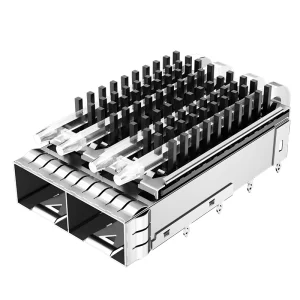
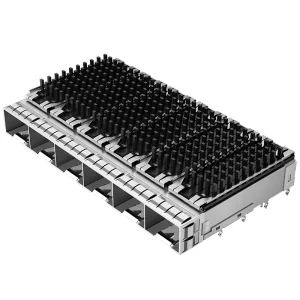
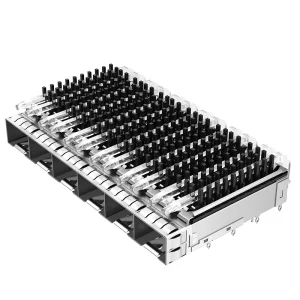
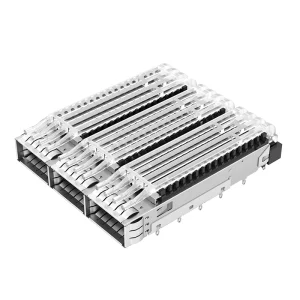
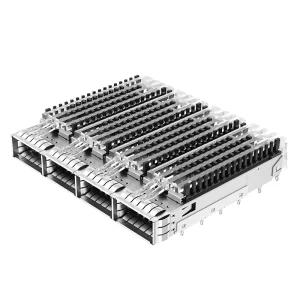
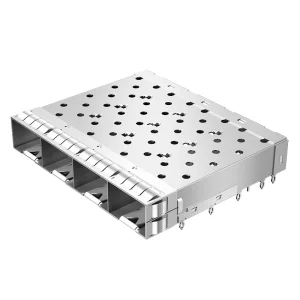
In high-density networking designs, the deployment of 1xN ganged SFP cages (where N typically represents 2, 3, 4, 6, or 8 contiguous ports in a single physical assembly) represents a critical design path. These configurations enable system architects to maximize faceplate I/O density while managing mechanical alignment and Electromagnetic Interference (EMI) constraints. Unlike stacked (2xN) configurations, ganged (1xN) architectures allow for direct thermal routing on the host PCB, providing optimized airflow vectors across the integrated optical transceivers.
As a global manufacturer and key supplier, Lumetra Optoelectronics supplies premium-grade alternative cages matching industry leading components like TE Connectivity and Amphenol. Our designs implement advanced press-fit (compliant pin) technology and precise EMI elastomer gaskets or metal spring fingers, mitigating cross-port leakage and ensuring stable signal integrity up to 28 Gbps per lane in SFP+ configurations.
How high-density 1xN SFP cages address global infrastructure demands for bandwidth scaling and rugged environments.
Modern data infrastructures rely heavily on density optimization. The 1xN ganged cage family maximizes linear port density on standard 1RU switches and server network interface cards (NICs), minimizing overall equipment foot-print while preserving thermal margins.
For cellular base stations, distributed units (DUs), and central units (CUs), environments are subject to severe vibrations and temperature spikes. Our press-fit, highly ruggedized through-hole 1xN SFP cages maintain reliable physical connection under dynamic stress.
Industrial networking demands exceptional EMI shielding to prevent signal corruption on noisy factory floors. Using integrated metal shielding spring-finger configurations, our ganged SFP cages prevent stray field emission and susceptibility.
Production Facility
Annual Export Revenue
R&D Engineers
Industry Expertise
Deep dive into key parameters: press-fit technology, thermal heat sinks, and EMI gasket dynamics.
| Feature / Parameter | Press-Fit (Compliant Pin) Cage | THT (Through-Hole Solder) Cage | Lumetra Direct Customization |
|---|---|---|---|
| Mechanical Connection | Highly reliable gas-tight press-fit joints | Traditional wave/hand soldering options | Optimized pin length and tail configuration |
| EMI Containment | 360-degree spring-finger contacts | Elastomeric or metal gaskets at faceplate | Customized EMI gaskets for specific chassis layouts |
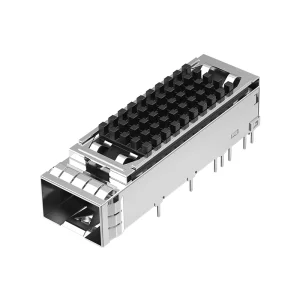
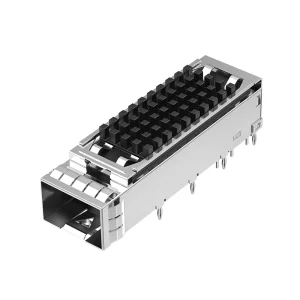
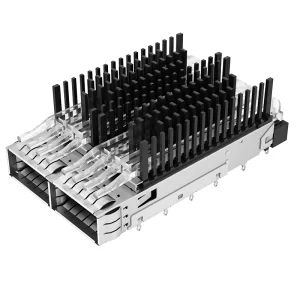
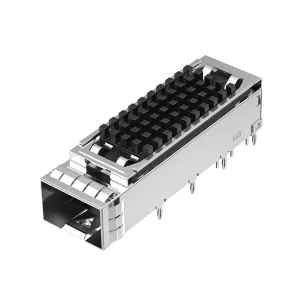
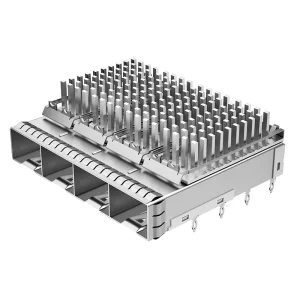
| Thermal Interface | Built-in heat sinks (fin layouts customizable) | Direct heatsink clip configurations | Specialized pin-fin & straight-fin configurations |
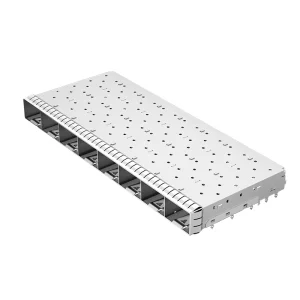
| Application Density | Best for 1x4, 1x6, and 1x8 multiport designs | Suitable for lower port count or legacy PCBs | Scalable from 1x1 up to 1x12 custom configurations |
Modern high-speed transceiver designs require trace geometries that maintain precise characteristic impedances (typically 100 ohms differential). The press-fit termination style significantly limits the stubs created by through-hole solder pins, providing cleaner signal pathways for 10Gbps SFP+ and 28Gbps SFP28 rates. Our TE Replacement and Amphenol Compatible series offer strict compliance to the Multi-Source Agreement (MSA) footprint, ensuring drops-in replacement viability without requiring board redesign.
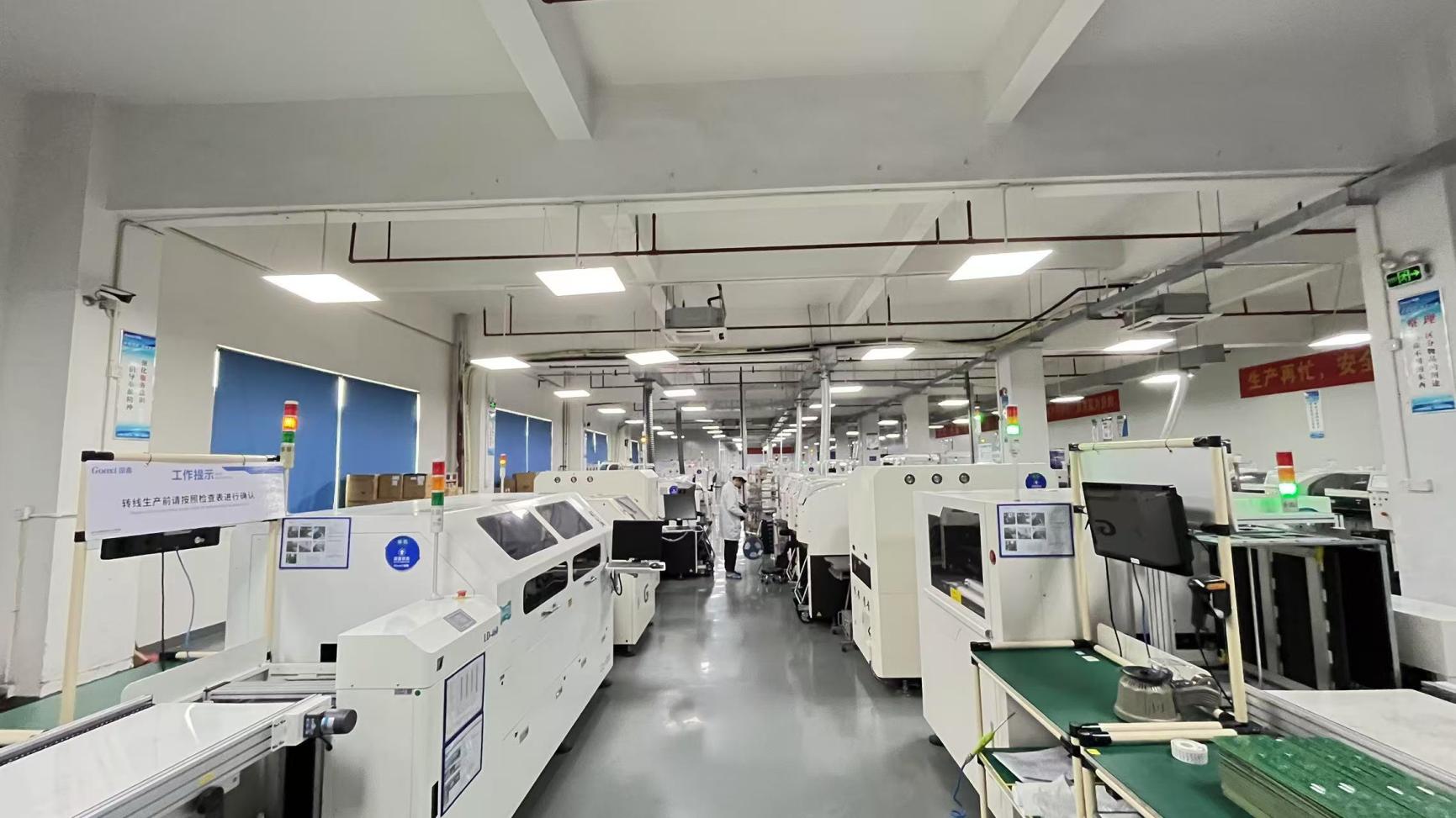

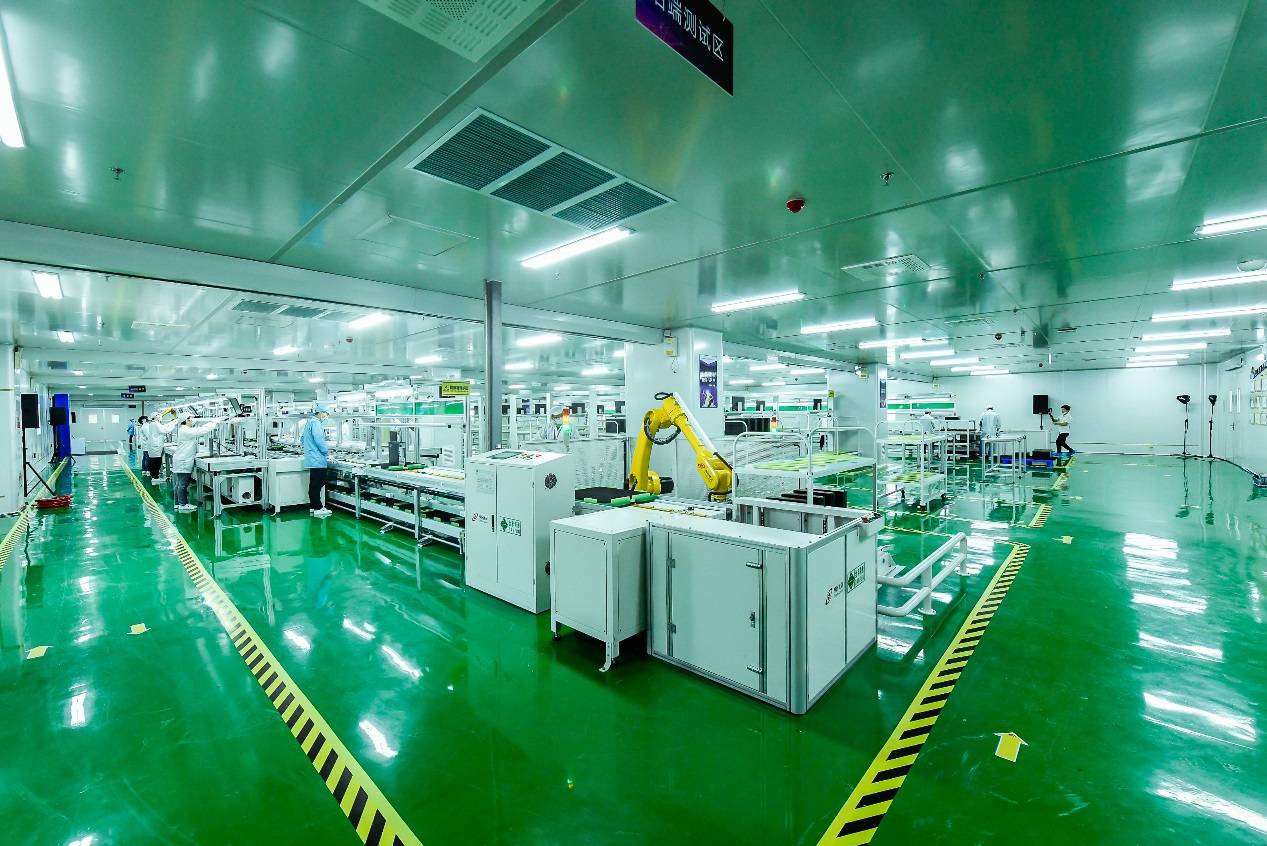
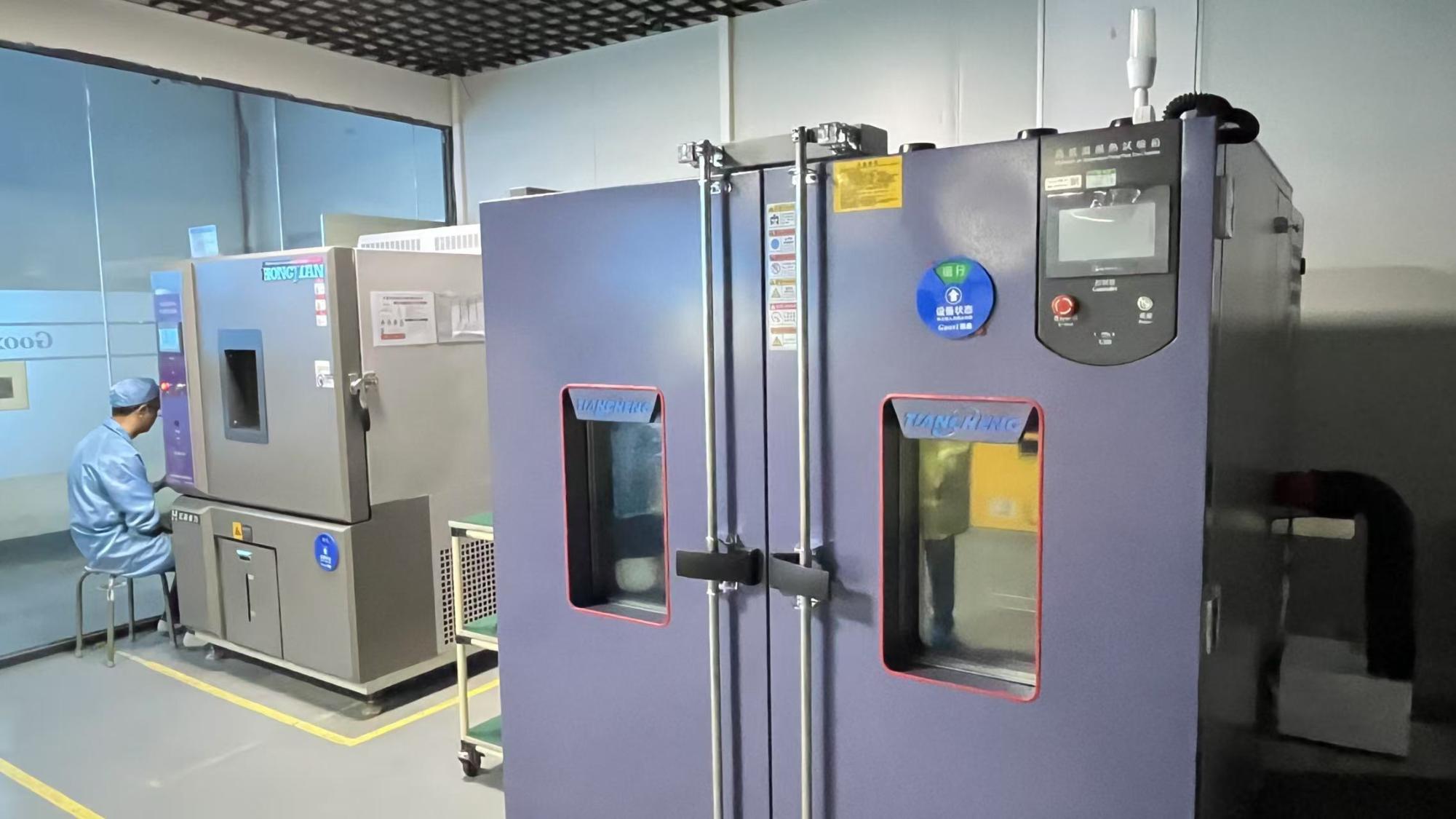
Founded in 2016, Lumetra Optoelectronics Technologies Co., Ltd. is a recognized leader in developing high-speed optical transceivers and high-performance physical layer connectivity solutions. Our expertise spans datacom, telecom, and cloud platforms. Operating from an advanced 8,500㎡ facility, we specialize in high-precision stamping, plastic molding, automated optical alignment, and high-frequency signal testing.
We leverage 7 years of direct export experience backed by over 11 years of deep-seated industrial history. This extensive knowledge enables us to service an expansive global network of network equipment brands, hyperscale data center operators, and system integrators. By working with more than 1,200 supply chain partners, we secure continuous access to high-grade raw materials, offering highly competitive lead times even during global supply chain constraints.
Our design philosophy emphasizes E-E-A-T principles. Every product in our catalog—ranging from single port SFP+ cages to 1x8 high-density ganged systems—is scrutinized by our 48-inspector strong Quality Assurance team using environmental stress testing, thermal chamber monitoring, and high-frequency vector network analyzers.
Navigating international regulations while preparing hardware architectures for the next generation of I/O connectivity.
All Lumetra 1xN ganged SFP cages are fully compliant with RoHS 3, REACH, and CE standards. We utilize UL 94-V0 rated materials for all thermoplastic internal structures, ensuring safety requirements for enterprise and public infrastructure are met or exceeded in North America, Europe, and Asia-Pacific markets.
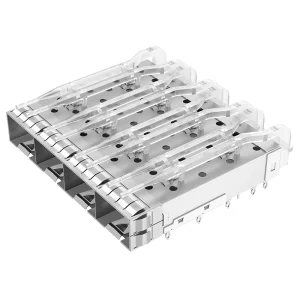
Supported by our robust team of 86 R&D engineers, we execute rapid prototyping. Our capabilities include proprietary wavelength tuning integrations, thermal fin height alterations, custom pin lengths for thick PCBs, and customized light pipe geometries designed to project light accurately onto faceplate interfaces.
As the industry moves towards 112G PAM4 and Co-Packaged Optics (CPO), cage requirements are shifting toward tighter EMI envelopes and integrated cooling architectures. Lumetra is actively prototyping OSFP and SFP-DD ganged cages featuring advanced copper alloy compositions and direct liquid-cooling integration pathways.
In the past calendar year alone, Lumetra introduced 220 new product variants. This robust pipeline ensures our clients have immediate access to compatible alternatives for hard-to-source components, keeping complex system integration timelines on track.
Expert technical answers regarding SFP Cage 1xN (Ganged) mechanical design, compatibility, and implementation.
A "Ganged" (1xN) SFP cage arrangement positions the cages horizontally in a single row on the PCB, allowing components or thermal vias to be placed directly beneath the cage. A "Stacked" (2xN) configuration positions ports back-to-back in two rows (upper and lower), doubling the density per linear length but introducing thermal bottlenecks and complexity in PCB layout routing.
We follow strict Multi-Source Agreement (MSA) mechanical specifications for outer cage geometries, foot layouts, and pin placements. All equivalent models undergo cross-matching evaluations where they are physically press-fitted into identical test PCBs to ensure zero tolerance drift and complete electrical and mechanical interoperability.
Heatsinks on Lumetra ganged cages can be ordered as integrated (pre-assembled with custom clip configurations) or shipped separately. We offer straight-fin configurations for linear wind tunnels, pin-fin configurations for omnidirectional/turbulent airflow systems, and custom height profiles (e.g. 4.2mm, 6.5mm, and 13.5mm) to match system height clearances.
Our EMI spring-finger contacts are manufactured using high-grade copper alloy (bronze or beryllium copper) plated with a nickel underplate and finished with gold plating at contact points. This combination minimizes galvanic corrosion risks when placed in contact with different metallurgies on the host chassis bezel.
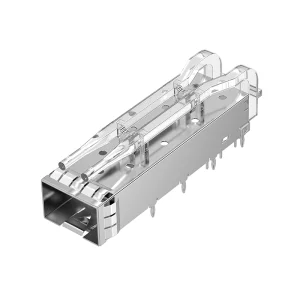
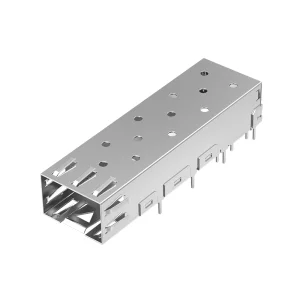
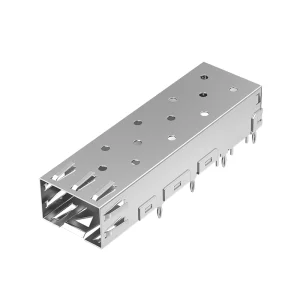
Select from our extended inventory of ganged assemblies featuring integrated light pipes, heat sinks, and EMI gaskets.