Lumetra
Lumetra
Lumetra
High-performance transceiver solutions optimized for multi-vendor compatibility, long-span signal integrity, and varying environmental demands.
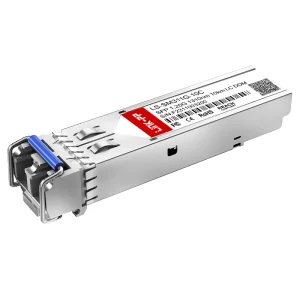
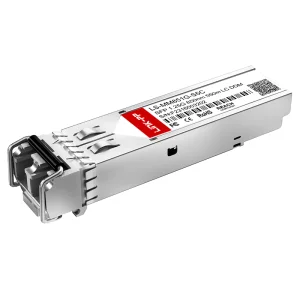
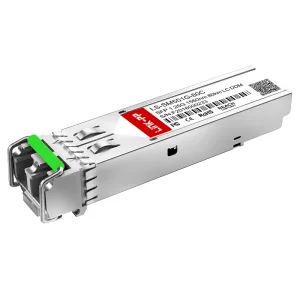
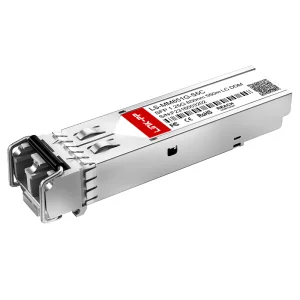
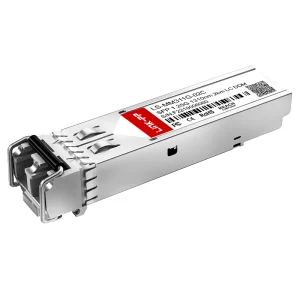
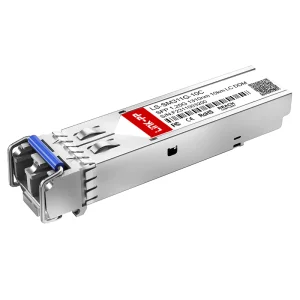
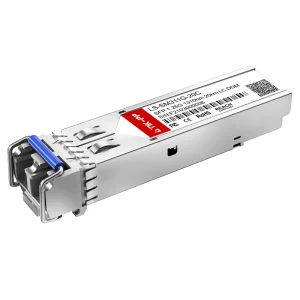
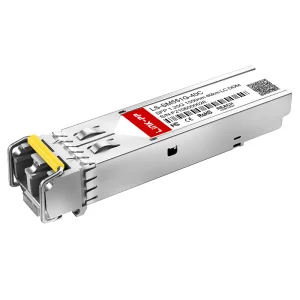
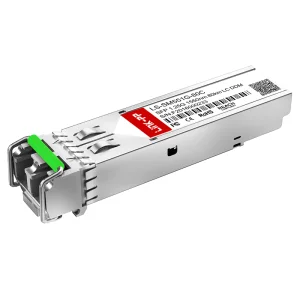
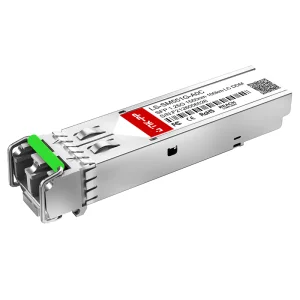
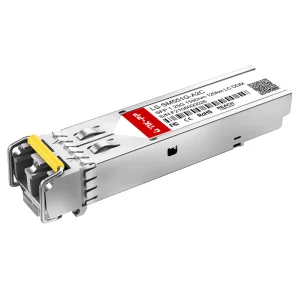
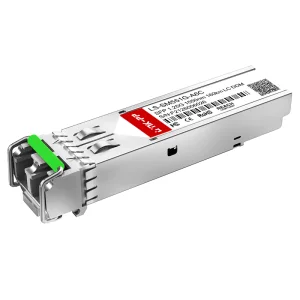
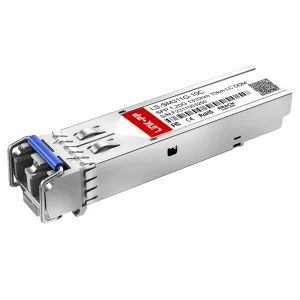
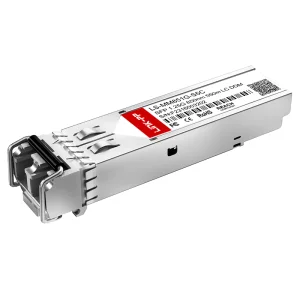
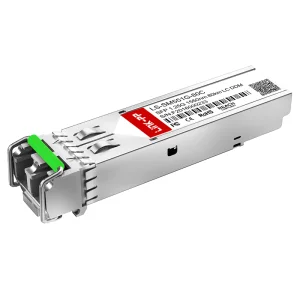
The Small Form-factor Pluggable (SFP) module operating at 1.25Gb/s represents the foundational hardware standard of modern fiber-optic network infrastructure. Originally standardized under the SFP Multi-Source Agreement (MSA), specifically referencing document INF-8074i, these interfaces operate as critical bridges converting electrical signals from switches, routers, and host bus adapters (HBAs) into precise optical pulses designed to traverse fiber optic channels.
From an engineering perspective, a 1.25G SFP transceiver module integrates an optical subassembly (OSA), comprising a Transmitter Optical Subassembly (TOSA) and a Receiver Optical Subassembly (ROSA), with a highly robust electronic drive unit. The TOSA utilizes specialized semiconductor lasers, including Vertical-Cavity Surface-Emitting Lasers (VCSEL) for short-span applications (typically 850nm on multi-mode fiber) and Fabry-Perot (FP) or Distributed Feedback (DFB) lasers for longer single-mode reaches (ranging from 10km up to 160km).
"By employing Digital Optical Monitoring (DOM) compliant with the SFF-8472 diagnostic monitoring interface standard, operators gain real-time telemetry into diagnostic parameters such as laser bias current, transmitter power, receiver power, internal transceiver temperature, and operational supply voltages."
These parameters are crucial for predictive analytics in telecommunication networks, preventing system-level failures before they disrupt user traffic. The performance and resilience of these modules are governed by key optical parameters: dispersion penalties, extinction ratios, and optical return loss budgets. In high-density installations, maintaining a high signal-to-noise ratio (SNR) is paramount, necessitating the use of low-jitter clock-and-data recovery (CDR) chips and precise impedance matching across the edge connector interface.
A professional manufacturer specializing in high-speed optical transceivers and fiber optic communication solutions for datacom, telecom, and cloud infrastructure applications.
Founded in 2016, Lumetra Optoelectronics Technologies Co., Ltd. has developed into a reliable supplier with strong engineering capabilities and global export experience. We support advanced customization including protocol compatibility, wavelength tuning, form factor adaptation, and power optimization. Backed by 11 years of overall industry expertise and 7 years of export history, we collaborate with over 1,200 supply chain partners to ensure stable component sourcing and manufacturing efficiency.
Where legacy stability meets modern regional infrastructure. A look at how localized deployments rely on 1.25G platforms.
Deploying 1.25G SFP optical transceivers inside municipal distribution rings where long-distance, low-latency communication is vital for protective relaying, SCADA control systems, and substation-to-substation telemetry under intense electromagnetic interference (EMI) environments.
In developing rural networks, 1.25G SFP modules play an essential role in cost-effective gigabit fiber-to-the-home (FTTH) expansion, serving as the physical layer connection in Optical Line Terminals (OLT) and distribution switches without demanding the high-cost overhead of 10G optical hardware.
Highly ruggedized, extended-temperature range (Industrial -40°C to +85°C) 1G modules are integrated into wayside control boxes along railway tracks and expressways, guaranteeing real-time signal transmission and HD security video monitoring over massive physical loops.
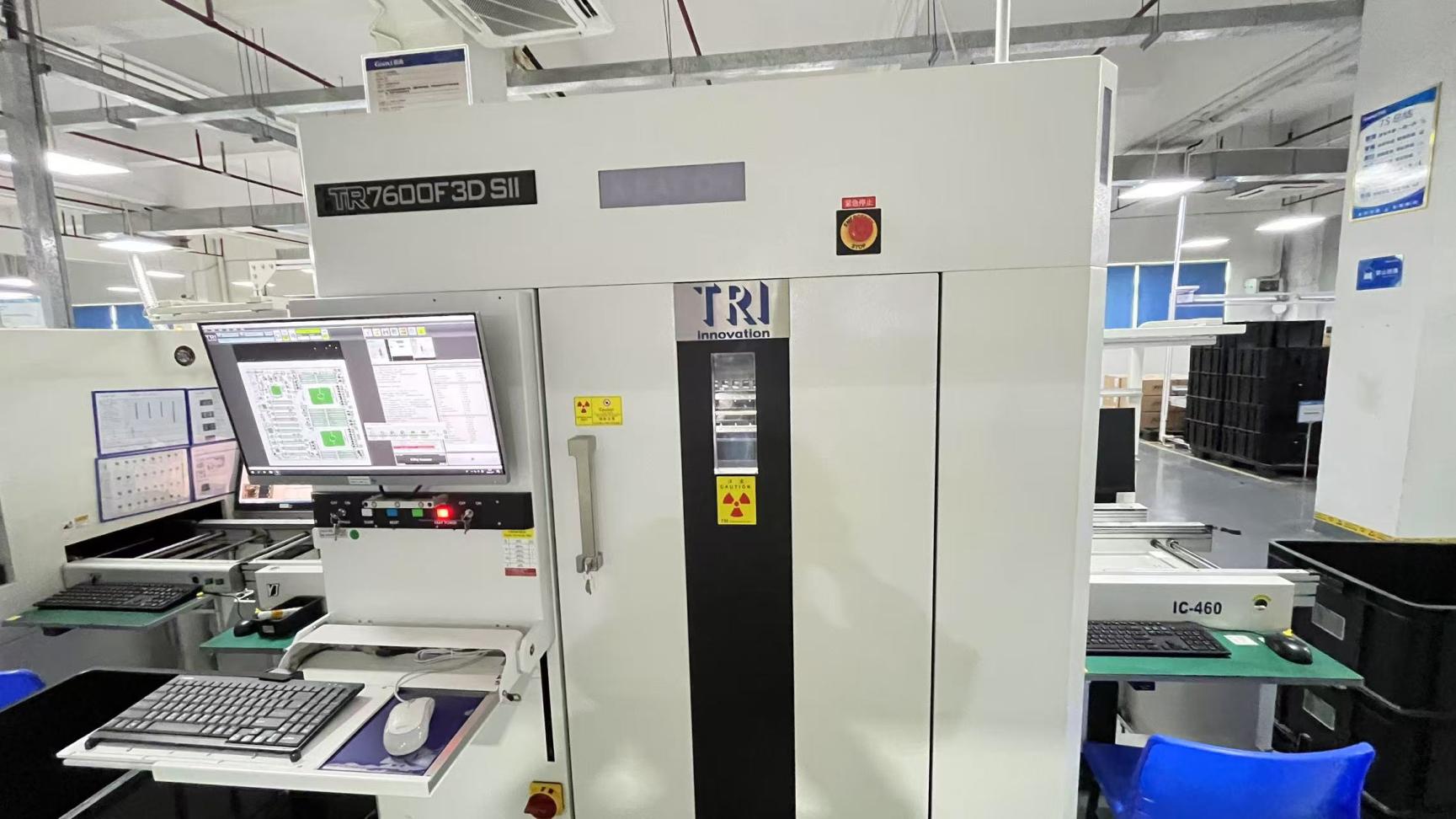
Procuring 1.25G SFP modules from high-tech manufacturing hubs in China provides customers with unmatched economies of scale combined with agile engineering capabilities. Lumetra's state-of-the-art facility integrates automated testing systems, component placement loops, and optical packaging technology inside cleanroom environments.



As modern data ecosystems transition toward 10G, 25G, 100G, and even 400G/800G, the role of the 1.25G SFP module remains vital. It serves as a persistent, high-reliability legacy layer. Network engineers often choose to run 1.25G links for control-plane communication, industrial out-of-band monitoring channels, and peripheral enterprise device routing. This practice preserves expensive high-bandwidth ports for high-density traffic.
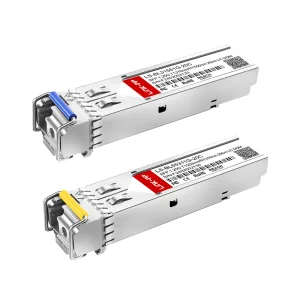
Lumetra’s engineering team is driving innovations to optimize 1.25G SFPs for modern hybrid setups. For example, our 1G BiDi (Bidirectional) SFP modules allow companies to double the data capacity of existing fiber infrastructure by transmitting and receiving signals over a single strand of fiber. By utilizing distinct wavelengths like 1310nm-TX/1550nm-RX and vice-versa, optical crosstalk is negated, offering a cost-effective alternative to laying new fiber optic cables.
Exporting to major economic zones including North America, Europe, Southeast Asia, and the Middle East requires rigorous compliance architectures. Our entire 1.25G product catalog is certified under CE, FCC, RoHS, and FDA laser safety regulations.
Additionally, compatibility testing is key to minimizing deployment delays. At Lumetra, we maintain an extensive testing suite featuring hardware from major switch vendors (such as Cisco, Juniper, Arista, HPE, Huawei, and Ubiquiti). This allows us to code and test our transceivers to match specific EEPROM signatures, preventing "unsupported transceiver" errors on host switches.
Technical and procurement answers designed for optical communication engineers and enterprise buyers.
Standard duplex SFP modules require two separate fiber optic strands: one for transmitting data (Tx) and another for receiving data (Rx). BiDi (Bidirectional) SFP modules transmit and receive data over a single fiber strand using two distinct wavelengths (e.g., 1310nm and 1550nm). This saves fiber infrastructure costs by doubling physical bandwidth capacity.
All our SFP modules feature customizable EEPROM microcode. We flash vendor-specific configuration files during the final testing stage to ensure seamless compatibility with major switch platforms. Please specify your system brand and models when placing an order so we can match the exact software profile required.
DOM (Digital Optical Monitoring) or DDM (Digital Diagnostic Monitoring) is standard under SFF-8472. It provides real-time telemetry on parameters like laser bias current, temperature, Tx power, and Rx power. While not mandatory for basic connectivity, it is highly recommended for mission-critical industrial networks to perform predictive health monitoring.
Generally, yes. Many 10G SFP+ switch ports support backward compatibility and can auto-negotiate down to 1G speeds. However, the switch configuration must be manually set to 1000Mbps speed in some operating systems. We recommend verifying switch hardware specifications before deployment.
We offer three temperature grades: Commercial (0°C to 70°C), Extended (-20°C to 85°C), and Industrial (-40°C to 85°C). Industrial temperature modules feature ruggedized internal components and specialized heat-spreading designs suitable for outdoor enclosures and wayside systems.
We operate a strict QA workflow supported by 48 certified inspectors. Every single module goes through optical performance testing, compliance validation, and environmental stress screening on our automated assembly lines to ensure zero out-of-box failures.
Explore our high-performance optical transceiver options. Click to review detailed engineering datasheets and request pricing.