Lumetra
Lumetra
Lumetra
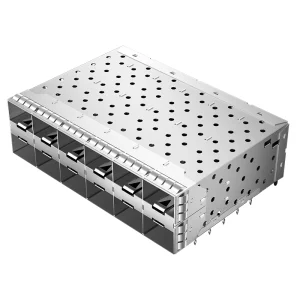
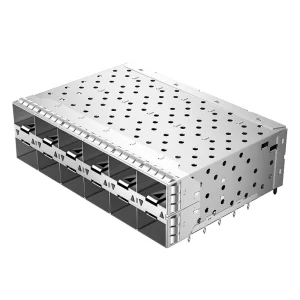
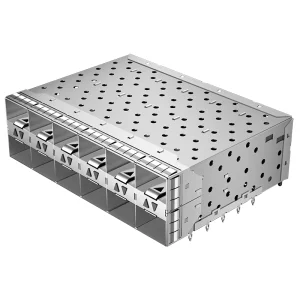
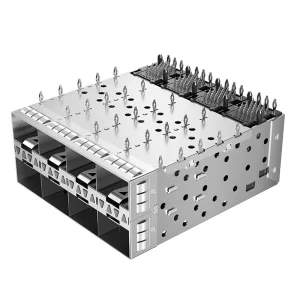
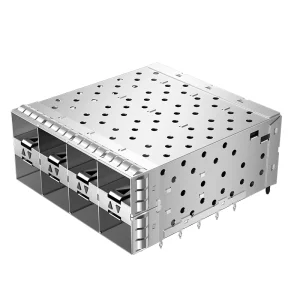
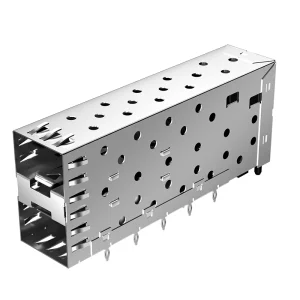
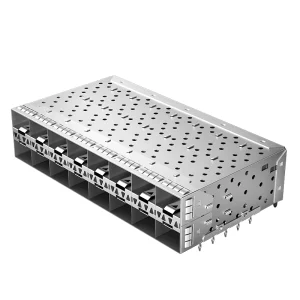
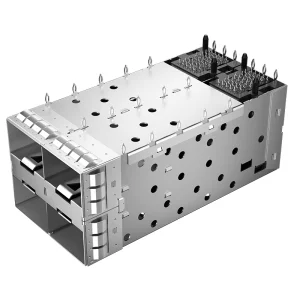
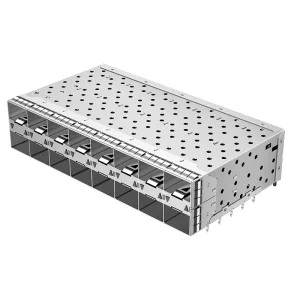
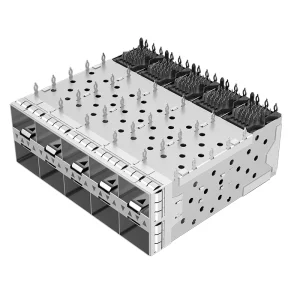
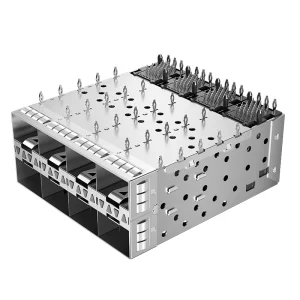
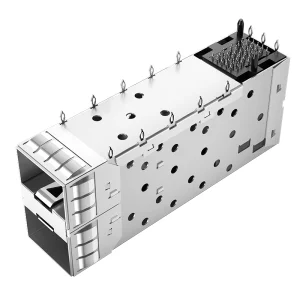
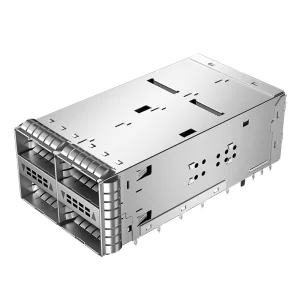
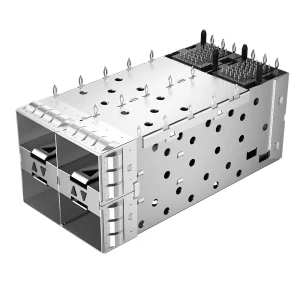
Explore our industry-standard 2xN stacked configuration SFP+ / SFP28 / zSFP+ press-fit cages engineered with integrated connectors and advanced electromagnetic interference shielding.
As cloud architectures transition to 100G, 400G, and eventual 800G fabric speeds, the physical space allocated to I/O interfaces on network switches, enterprise routers, and network interface cards (NICs) has become highly restricted. Traditional single-row SFP cages are insufficient to support the extreme port counts required by modern hyperscale data centers. This limitation drove the standardization and development of the 2xN (Stacked Ports) layout.
The 2xN architecture mounts two SFP cages vertically (stacked) in a single card profile, effectively doubling the port density within the same horizontal PCB footprint. By stacking ports vertically (e.g., 2x1, 2x2, 2x4, 2x6, and 2x8 configurations), hardware engineers can deploy up to 16 transceiver connections on a standard blade slot. However, this dense integration poses sophisticated engineering hurdles in signal integrity, EMI mitigation, compliance fitment, and thermal management.
Deploying stacked connectors requires specialized compliant press-fit pins to penetrate multi-layer high-frequency PCBs. Through years of simulation and hardware trials, Lumetra Optoelectronics designs cages that preserve signal path lengths, matching impedances at 100-ohm differentials and minimizing insertion/return loss ratios up to 28 Gbps per channel.
Stacked 2xN modules are prone to high electromagnetic leakage. Our designs leverage specialized outer elastomeric gaskets and internal spring fingers to ground the chassis, ensuring compliance with strict FCC and CISPR limits for high-frequency radiation.
Integrated light pipe structures and vent geometries optimize airflow paths. Stacked configurations generate concentrated heat, making ventilation holes in the cage shell critical to prevent optical transceivers from throttle-down.
Compliant pin configurations allow solderless press-fit (Eye-of-the-Needle structure) installation. This prevents thermal shock to multi-layer PCBs during assembly and facilitates field serviceability and replacement.
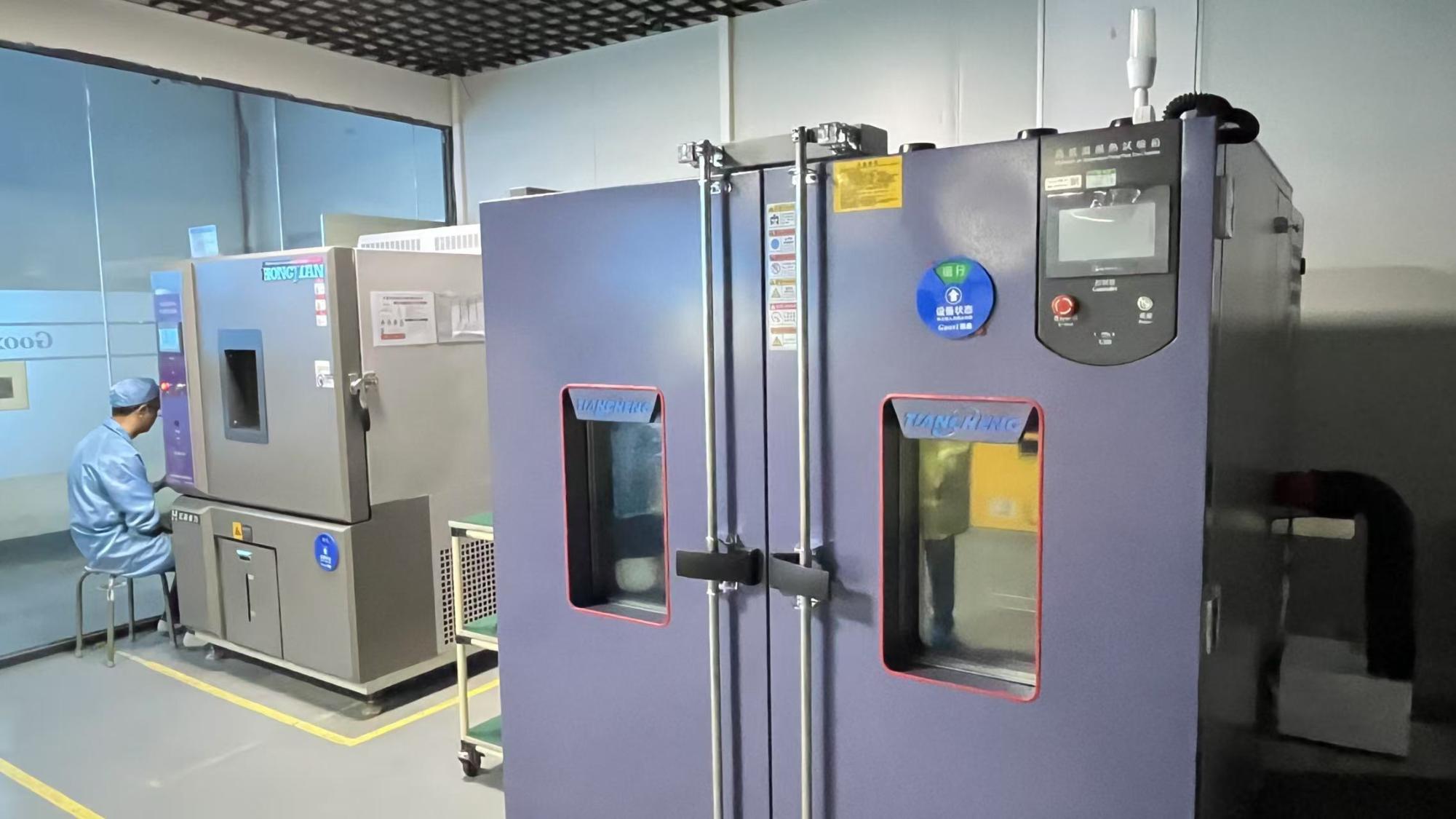
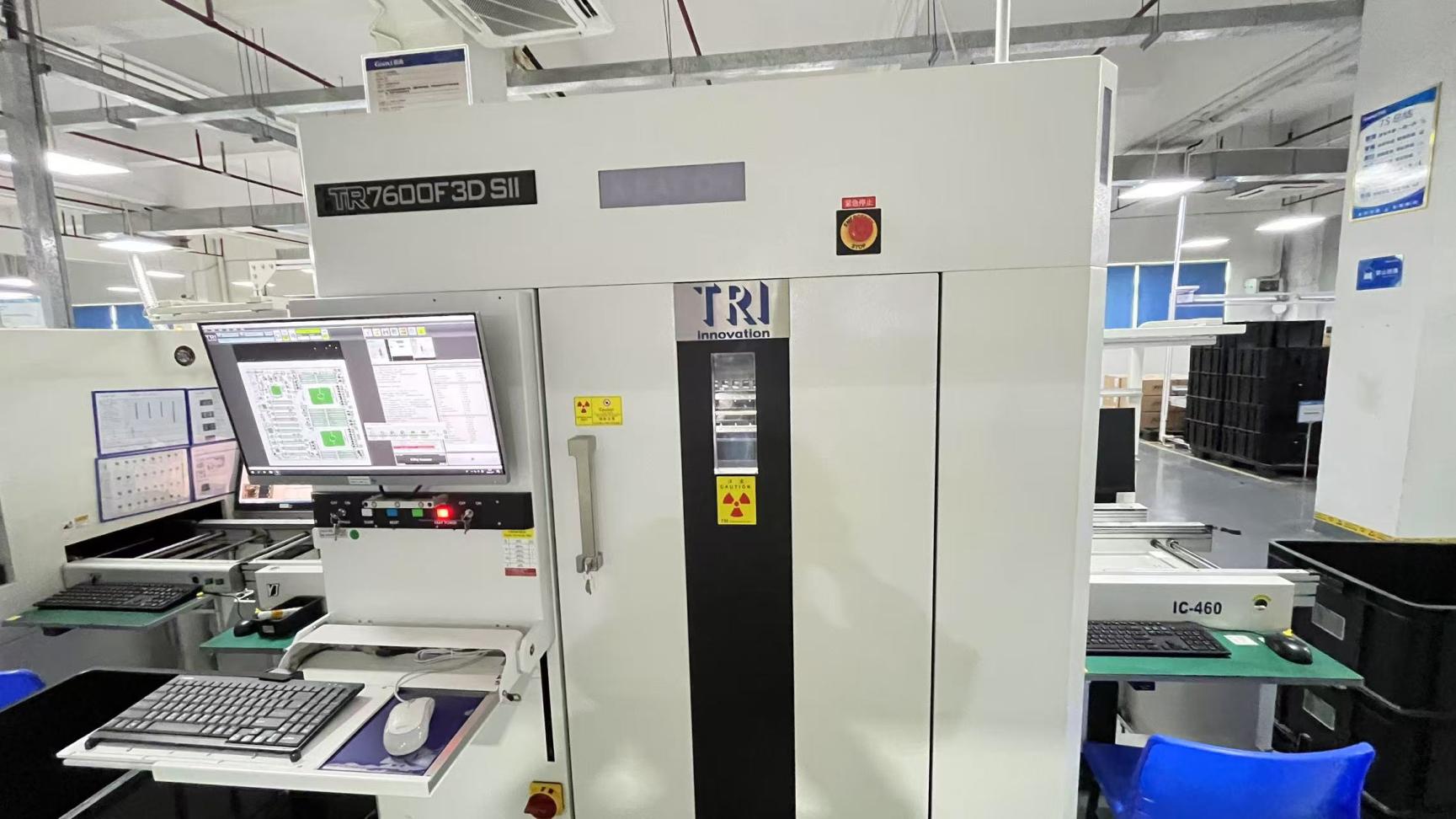
Lumetra Optoelectronics Technologies Co., Ltd. represents the cutting edge of domestic manufacturing efficiency. Here is how our production facility translates to supply chain resilience for global OEMs and ODMs.
Founded in 2016, Lumetra operates an expansive 8,500㎡ production facility engineered exclusively for high-speed optical transceivers, active cables, and passive connector cage systems. Over the past 11 years of industry experience—including 7 years of direct international business operations—we have cultivated robust pipelines yielding USD 18 million in annual export revenue.
Our competitive advantage lies in vertical integration. By manufacturing both cages (metal structures) and advanced optical transceivers, we understand physical tolerance constraints better than standard stamping companies. This ensures that every TE-compatible or Molex-compatible SFP cage we manufacture matches the exact mating dimensions, insertion force limits, and electrical specs of the original specifications.
Innovation is constant. Lumetra’s engineering cohort launched approximately 220 new products in the past year alone, meeting the rapid shifting cycles of datacom architecture.


Explore our shielded SFP+ and high density zSFP+ / zQSFP+ stacked models, offering drops-in compatibility with legacy tier-1 manufacturers.
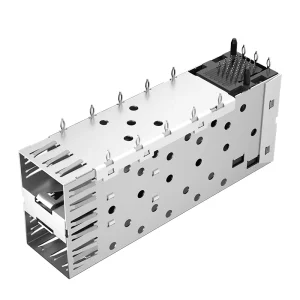
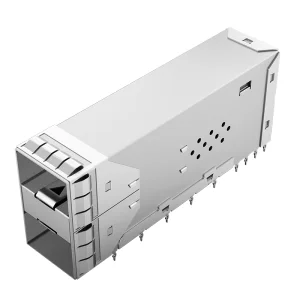
Compare mechanical attributes and cross-reference identifiers across typical 2xN SFP cage formats. All items designed for seamless swap replacements in high-density telecommunication line cards.
| Part Number | Reference Cross-Brand | Configuration | Mating Pins | EMI Solution | Special Application |
|---|---|---|---|---|---|
| 1-2007562-8 | TE Compatible | 2x6 Stacked (12 Ports) | 240 Pin Press-Fit | Metal Outer Spring Fingers | High density edge routers |
| 2180640-1 | TE Replacement | 2x6 Stacked (12 Ports) | 240 Pin Press-Fit | Spring Fingers & Light Pipes | Visual link indicator systems |
| 2347721-8 | TE Compatible | zSFP+ 2x6 (12 Ports) | 240 Pin Press-Fit | Enhanced Shielding (28G) | SFP28 High-bandwidth fabric |
| SFPP-3120-L | Pulse Compatible | 2x4 Stacked (8 Ports) | 160 Pin Press-Fit | Elastomeric Gaskets | Compact enterprise switchgear |
| 754625001 | Molex Compatible | 2x1 Stacked (2 Ports) | 40 Pin Through Hole | Chassis Ground Tabs | Edge gateway access terminals |
| 2308171-1 | TE Compatible | zQSFP+ 2x2 (4 Ports) | 152 Pin Press-Fit | Gasket & Four-channel Pipes | 100G high throughput storage |
North American data centers operating massive AI clusters utilize 2x6 and 2x8 stacked configurations. High speed and EMI immunity are the primary drivers. Stacked zSFP+ and zQSFP+ cages must function without signal degradation in dense, top-of-rack leaf-spine structures. Standardized thermal footprints are mandatory to allow modular swapping without taking servers offline.
European tier-1 carriers focus on strict telecom regulations, requiring exceptional EMI shielding. Systems utilizing 2xN SFP configurations must comply with strict CE electromagnetic emission directives. Lumetra’s integration of outer spring fingers and customized metal mesh gaskets provides the critical dB attenuation needed to clear certifications.
Distributed edge setups are often subjected to challenging outdoor temperatures. The 2x1 and 2x2 press-fit models with integrated light pipes offer visual diagnostics in the field. These architectures require highly durable mechanical plating (nickel-tin combinations) to resist corrosion and moisture while maintaining high impedance continuity over years of deployment.
Industry projections indicate that while SFP28 (28Gbps) and QSFP28 (100Gbps) are standard, migration towards SFP56 (56Gbps PAM4) and SFP-DD (Double Density) is accelerating. High density 2xN configurations are evolving to incorporate thermal heatsinks directly attached to the cage bodies, using advanced heat-pipe designs to dissipate heat levels exceeding 5.5W per optical module.
Get detailed answers on layout requirements, board press-fit constraints, and shielding performance metrics for 2xN SFP cages.