Lumetra
Lumetra
Lumetra
High-performance transceivers, shielded assemblies, and custom connectors engineered for maximum throughput and minimal loss.
Decoding the shift in global high-speed optical transceivers and supply-chain landscapes.
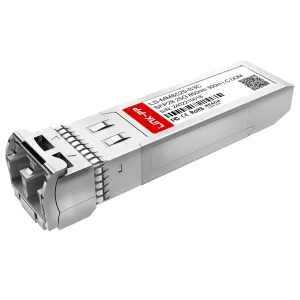
In the digital age, high-speed optical connectivity acts as the nervous system of modern data and telecommunications. Small Form-factor Pluggable (SFP) optical transceivers, alongside newer iterations such as SFP+, SFP28, SFP56, and SFP-DD, serve as critical interfaces converting electrical signals into optical signals. The growth of hyperscale data centers, 5G NR deployment, high-performance computing (HPC), and artificial intelligence workloads has triggered a global surge in demand for bandwidth, density, and efficiency.
The global SFP transceiver market has transformed from localized manufacturing to a highly integrated, globalized supply network. With optical networks migrating from 10G and 25G toward 100G, 400G, and 800G, enterprise buyers and system integrators must evaluate suppliers on more than unit cost alone. Factors such as Multi-Source Agreement (MSA) compliance, raw semiconductor sourcing resilience, and specialized hardware testing now define the quality of top-tier exporters.
Ensuring optical modules operate seamlessly across diverse OEM network switches (Cisco, Juniper, Arista, Huawei) without throwing system errors.
Matching the specific application needs: Direct Modulated Lasers (DML) for cost efficiency, Electro-absorption Modulated Lasers (EML) for long-reach high speed, and VCSEL for short multimode links.
Minimizing thermal dissipation (Watts per Gbps) to optimize cooling efficiency in dense racks, protecting high-cost switching silicons.
Lumetra Optoelectronics Technologies Co., Ltd. is an industry-leading manufacturer specializing in high-speed optical transceivers and fiber optic communication solutions for datacom, telecom, and cloud infrastructure applications.
Established in 2016, Lumetra has built a solid reputation over 11 years of deep-rooted industry expertise, including 7 years of specialized global export experience. Operating from an advanced 8,500㎡ facility, they produce standard-compliant components for OEM networks, hyperscale data centers, and telecommunication carriers worldwide.


Lumetra maintains a diversified trade background with strong presence in OEM and ODM markets. Its primary markets include North America, Europe, Southeast Asia, and the Middle East, serving telecom operators, data center integrators, and network equipment distributors. To ensure stable component sourcing and manufacturing efficiency, the company collaborates with over 1,200 supply chain partners, sourcing premium lasers, photodiodes, and high-speed electrical connectors.
With strong R&D capability, Lumetra supports advanced customization including protocol compatibility, wavelength tuning, form factor adaptation, and power optimization. The company employs 86 R&D engineers focused on optical design, hardware development, and signal integrity optimization. In the past year, Lumetra launched approximately 220 new products, reflecting its continuous innovation in high-speed optical communication technologies.
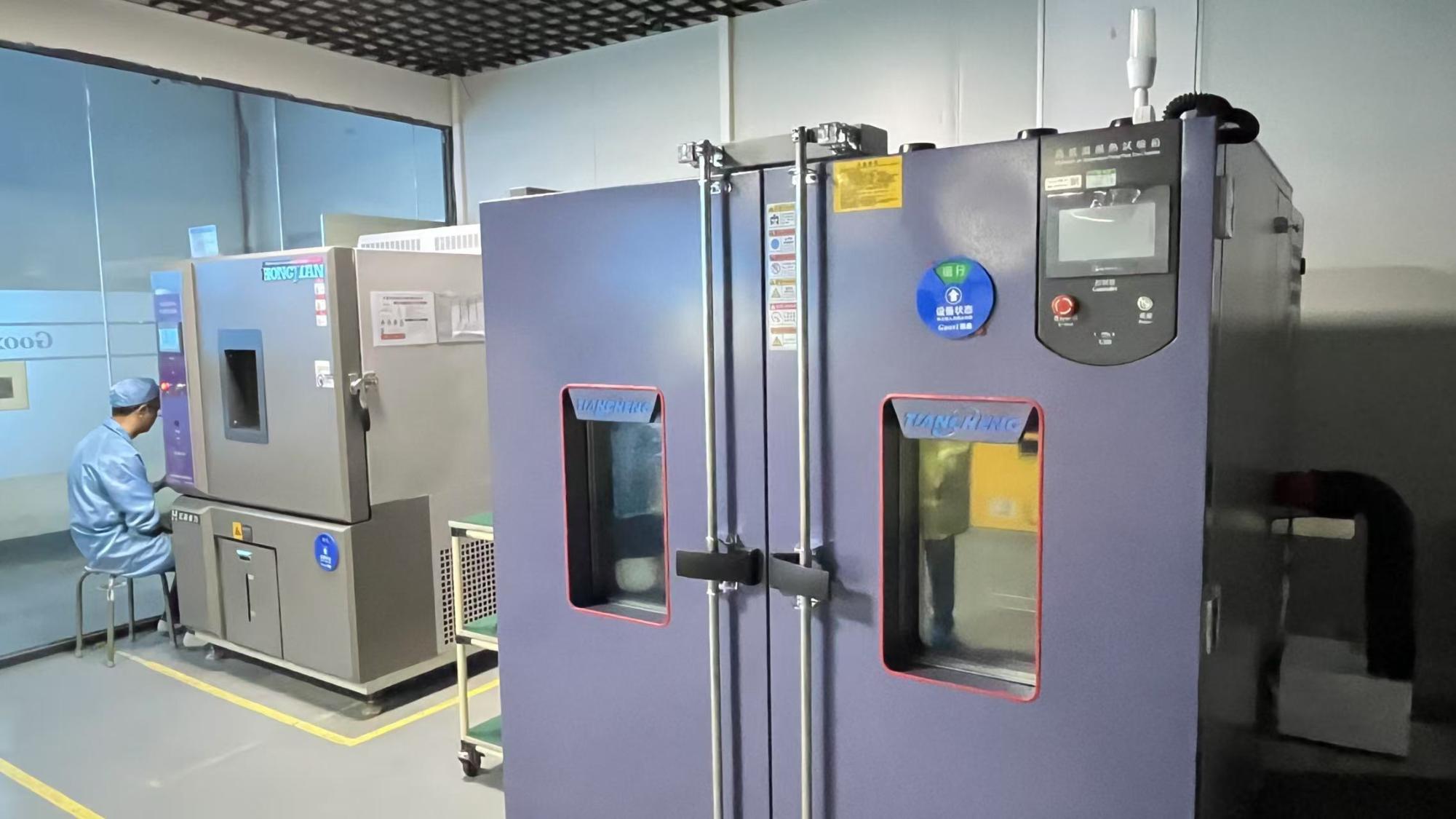
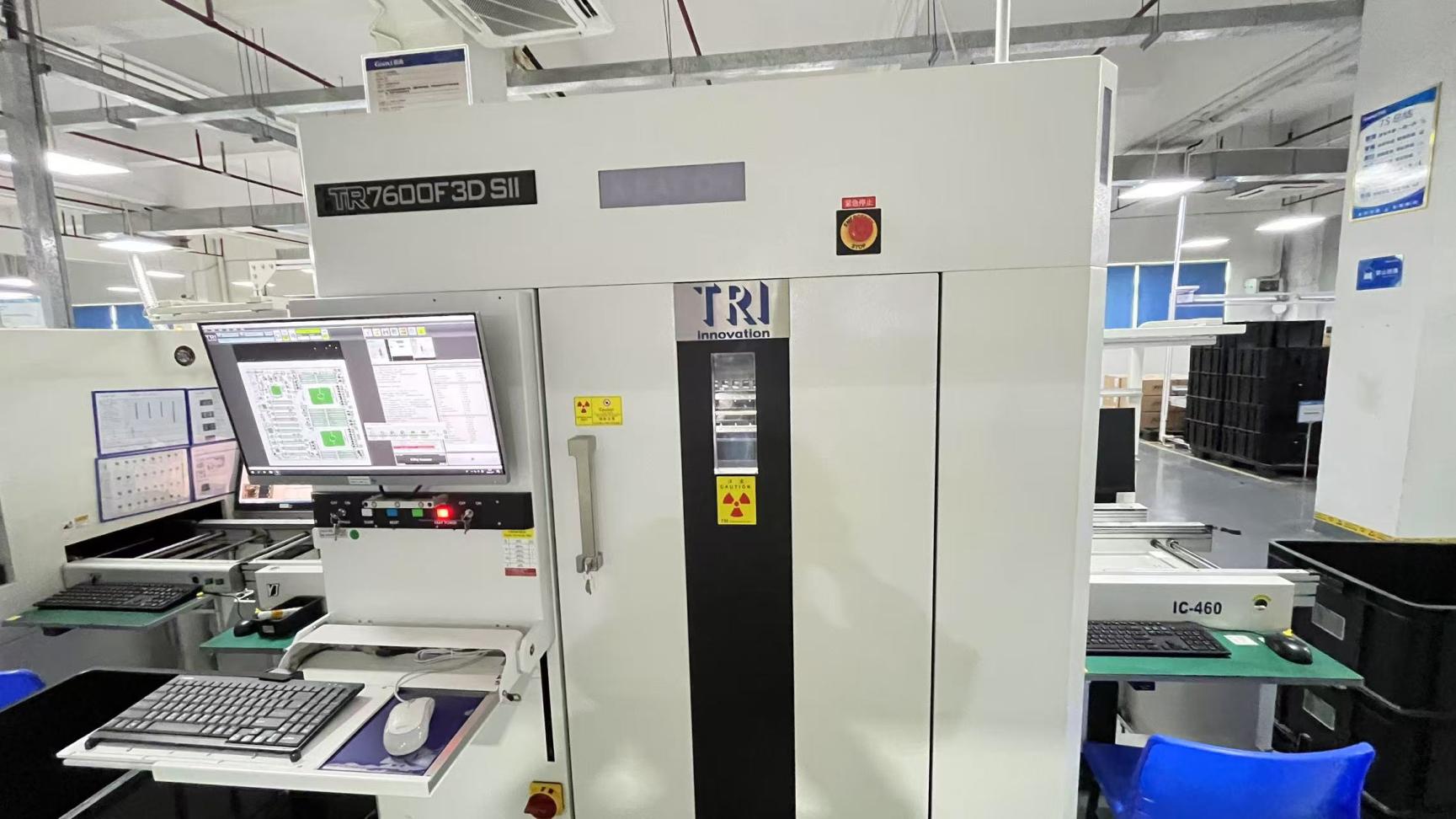
Quality assurance is maintained through a combination of automated optical performance testing, environmental stress screening, and manual inspection processes. The quality control team consists of 48 trained inspectors ensuring strict compliance with international standards such as CE, FCC, RoHS, and TÜV.
A direct look at the top regional players, production capability metrics, and custom engineering focus areas.
| Manufacturer Group | Primary Production Region | Key Strengths | Customization Capability | Best For |
|---|---|---|---|---|
| Tier-1 Telecom Brands | North America / Japan | Proprietary silicon photonics, legacy integration. | Low (Standardized Catalog) | Carrier core backbones |
| High-Capacity Exporters | China (Wuhan / Shenzhen) | Massive scale, fast turnaround, aggressive pricing. | Medium to High | Hyperscale data centers, standard enterprise |
| Specialized R&D Innovators (e.g., Lumetra) | China (Global distribution) | Agile engineering, OEM compatibility customization, 100% testing. | High (Wavelength, firmware tuning) | Integrators, custom OEM switches, complex environments |
| Niche Component Manufacturers | Taiwan / South Korea | Specific subcomponents, advanced lasers. | Medium | High-end RF & wireless backhaul links |
| Legacy Cable Assemblers | Global / Multiple sites | Copper DAC and simple passive media converters. | Low | Intra-rack short cabling links |
When selecting a manufacturer from the Top 10 lists, purchasing managers must check for Digital Diagnostics Monitoring (DDM/DOM) implementation. DDM is a vital function that allows network operators to monitor real-time parameters of the SFP, such as optical output power, optical input power, temperature, laser bias current, and transceiver supply voltage. A manufacturer with strong E-E-A-T credentials will verify these features on 100% of units shipped using automated optical spectrum analyzers.
How advanced SFP architectures address distinct enterprise and telecommunication challenges.
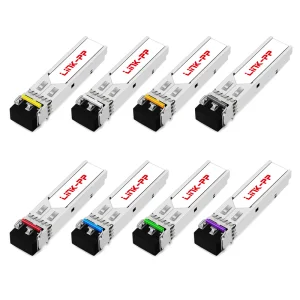
Modern leaf-spine architectures require high densities, low-latency, and high-performance links. Utilizing CWDM/DWDM SFP28 and SFP+ modules allows network engineers to maximize the data capacity of existing fiber infrastructure over distances up to 80km without investing in new dark fiber leases.
5G base stations require optical links that perform reliably in extreme outdoor temperatures. Industrial-grade Bidirectional (BiDi) transceivers work efficiently across a temperature range of -40°C to 85°C, using a single strand of fiber for both transmit and receive paths, saving significant installation costs.
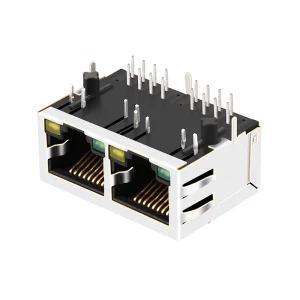
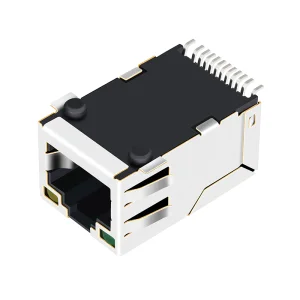
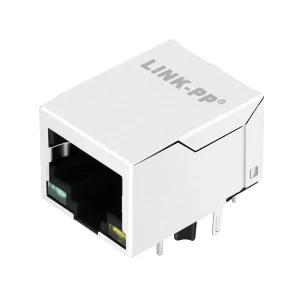
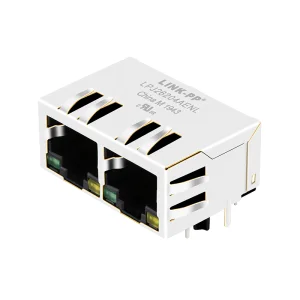
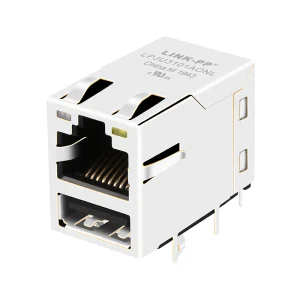
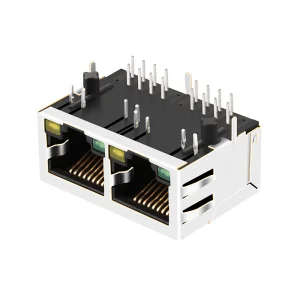
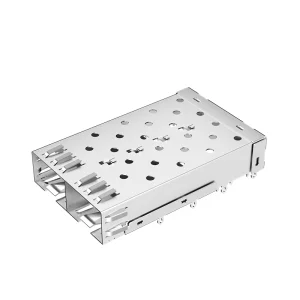
Factory floors and smart grids present challenges due to high electromagnetic interference (EMI). Integrating SFP cages with press-fit technology, coupled with shielded RJ45 magnetic connectors, creates a robust barrier against electrical noise, maintaining data integrity.
The path to 800G, 1.6T, and the rise of silicon photonics co-packaging.
Standardization of double-density form factors in mainstream cloud data centers. Silicon Photonics (SiPh) integration transitions from niche high-end switches to mainstream optical links, lowering cost-per-bit and operational energy requirements.
To overcome electrical trace attenuation between the ASIC switch and traditional pluggable transceivers, the industry begins shifting to Co-Packaged Optics, placing laser engines adjacent to the switch silicon. Linear Pluggable Optics (LPO) emerge to bypass internal DSP chips, saving massive power.
As computing clusters expand for massive AI training workloads, optical backplanes become standard. High-channel count DWDM and advanced modulation formats are integrated directly onto system boards to manage the extremely high bandwidth required for AI workloads.
Expert technical answers to key questions surrounding SFP selection, testing, and deployment.
The differences lie primarily in the supported data rates, which are determined by the internal clock speeds and modulation formats:
Every MSA-compliant transceiver contains an EEPROM memory chip storing standardized data (such as wavelength, vendor ID, serial number, and security hashes). Many major network equipment brands program their switches to read this data and block any SFP that does not match their vendor signature. Exporters like Lumetra resolve this by maintaining diagnostic labs equipped with major switch models (Cisco, Arista, HP, etc.) to program and verify compatible EEPROM code on every custom-ordered transceiver.
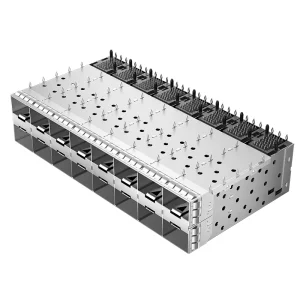
At high data frequencies (25GHz and higher), electrical crosstalk and electromagnetic interference (EMI) can escape the chassis and cause bit errors in nearby high-speed channels. Specialized press-fit EMI-shielded SFP cages and RJ45 connectors use grounding fingers, metal gaskets, and direct-mount press-fit pins to contain this radiation. This ensures compliance with FCC Part 15 and CISPR22 standards, keeping the overall system stable.
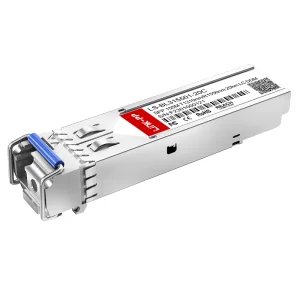
BiDi transceivers use wavelength division multiplexing (WDM) to transmit and receive signals over a single strand of fiber. For example, a module might transmit at 1310nm and receive at 1550nm, while the opposite end does the reverse. By using a single fiber strand instead of two, network operators can double their capacity without installing or leasing additional fiber lines.
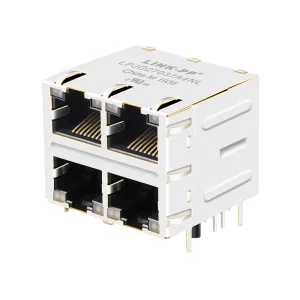
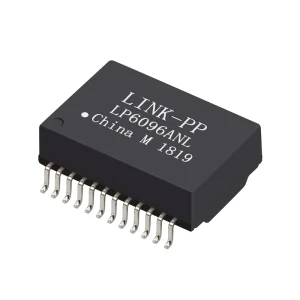
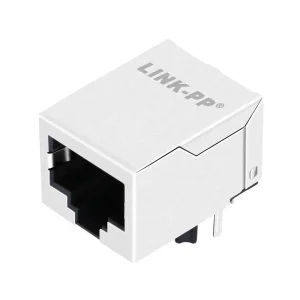
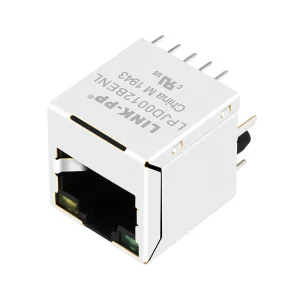
From dense multi-port RJ45 connectors to high-performance SFP components, browse our high-demand configurations.