Lumetra
Lumetra
Lumetra
Explore our flagship line of optical modules and high-reliability connectivity products engineered to perform under demanding industrial environments.
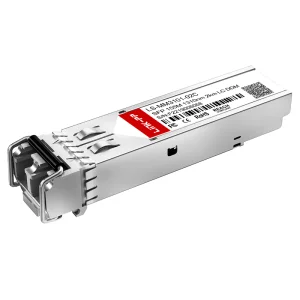
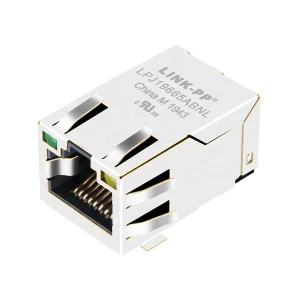
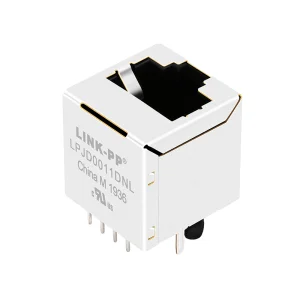
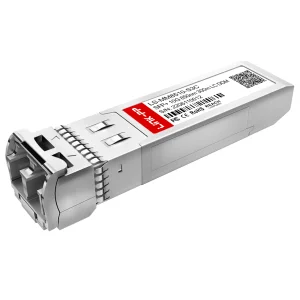
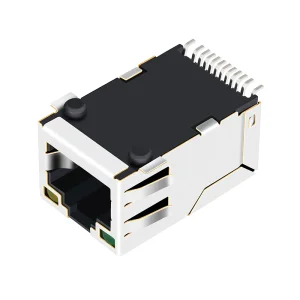
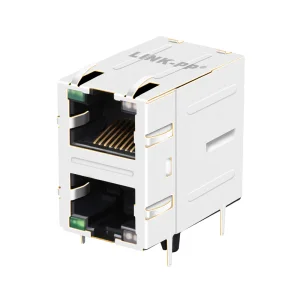
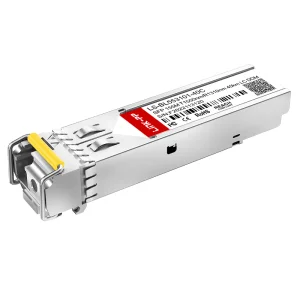
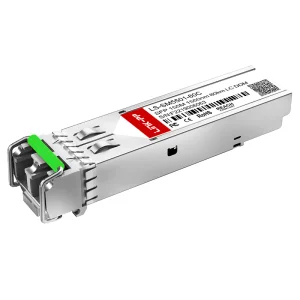
Small Form-Factor Pluggable (SFP) optical transceivers represent the cornerstone of modern optical networking, facilitating seamless transitions between electrical and optical interfaces across routers, switches, and physical transport media. As global data demands increase exponentially, driven by hyperscale cloud environments, artificial intelligence clusters, 5G deployments, and edge computing, these hot-swappable transceivers have transitioned from simple media converters to sophisticated network processing points.
Lumetra Optoelectronics Technologies Co., Ltd. stands at the leading edge of this transformation. Founded in 2016, our organization has established a legacy of delivering robust, high-performance optical communication equipment designed to support the rigorous demands of enterprise clients. Our engineering roadmap addresses critical physical-layer challenges such as chromatic dispersion, thermal dissipation, signal integrity, and digital monitoring, ensuring maximum network uptime.
Our optical transceivers are engineered using standard EEPROM parameters and highly compatible firmware structures, allowing seamless plug-and-play operation with hardware from major OEM providers including Cisco, Hirschmann, Juniper, and Huawei.
By utilizing Multi-Source Agreements (MSAs), we ensure our standard SFPs, SFP+ modules, SFP28 interfaces, and QSFP28 form factors comply with dimensional, power dissipation, and pin configuration guidelines, significantly mitigating integration friction for global system integrators.
Solid infrastructure, certified quality assurance, and robust R&D pipelines form the cornerstone of our manufacturing authority in China.
The optical network landscape is evolving rapidly under several key technology vectors:
Modern network operators focus on minimizing their Total Cost of Ownership (TCO). By optimizing laser power consumption and stabilizing operating temperatures, our modules reduce overhead and extend system lifespan.
We leverage our extensive 1,200+ raw materials supply chain network to maintain stable costs even amidst international market volatility, offering high-performance, cost-effective solutions.
Procurement officers and infrastructure designers encounter various systemic risks during global deployment cycles. We tackle these challenges with dedicated solutions.
Challenge: Brand lock-in by legacy switch manufacturers artificially inflates optical module sourcing budgets.
Our Solution: Lumetra’s state-of-the-art coding process tests compatibility with over 50 mainstream networking brands. Our internal EEPROM custom coding matches host equipment diagnostic expectations to ensure smooth operation.
Challenge: Standard components fail under the thermal stresses of outdoor edge cabinets and industrial factories.
Our Solution: We offer a range of industrial-grade (-40°C to +85°C) and extended-temperature range transceivers, designed with robust semiconductor lasers and passive components.
Challenge: Long production cycles delay major fiber rollouts.
Our Solution: Backed by our 1,200+ partner network and automated manufacturing processes, we maintain buffers of raw materials and sub-components. This allows us to scale production and fulfill volume orders on schedule.
Quality assurance at Lumetra is integrated into every phase of manufacturing. Across our 8,500㎡ facility, 48 certified inspectors enforce a multi-stage testing regimen to ensure all products meet global reliability standards.
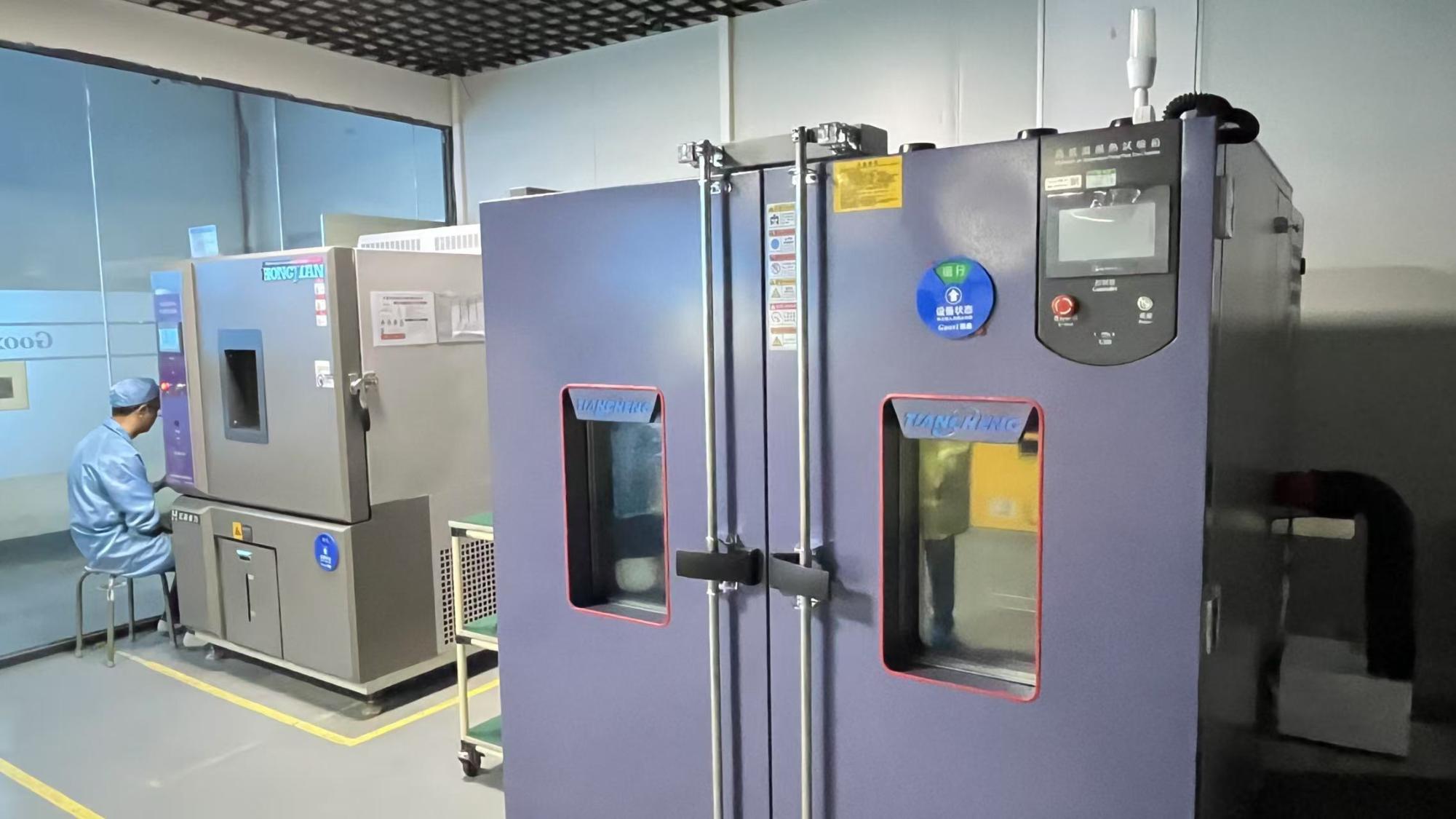
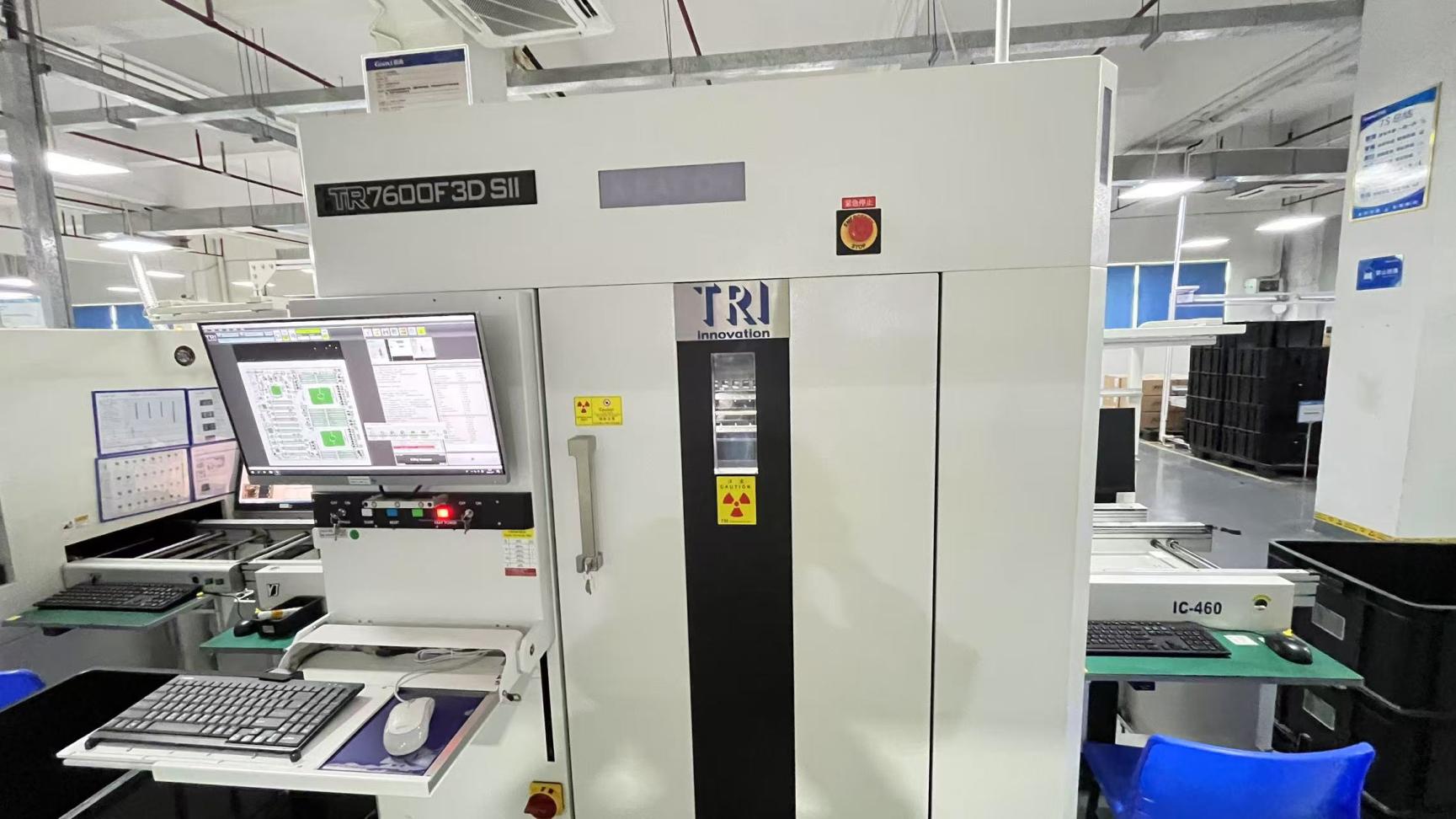
Each transceiver undergoes automated optical performance testing, including optical eye diagram measurements, bit-error-rate (BER) testing, and spectral center wavelength measurements. We perform environmental stress screening, cycling modules from -40°C to +85°C to filter out early failure modes before packaging.
Our 86 R&D engineers continuously optimize optical design, hardware layouts, and signal integrity to ensure excellent performance even in dense, high-frequency environments.
Our products comply with relevant international standards, facilitating smooth import and export operations.
All transceivers carry CE, FCC, RoHS, and WEEE certifications, demonstrating our commitment to environmental safety, electromagnetic compatibility, and reliability.
Our components integrate into large-scale commercial and telecom network topologies, providing reliable optical performance across various applications.
5G deployments require low latency and high bandwidth under varying weather conditions. Our industrial-grade 25G SFP28 CWDM/DWDM transceivers allow telecom operators to scale system capacity along existing fiber routes, reducing the need for costly trenching.
Modern server centers depend on fast connections between server nodes and switches. Our QSFP28 100G MPO multi-mode transceivers, designed with 850nm VCSEL lasers, support reliable, high-density connections with low power consumption.
For Fiber-to-the-Home (FTTH) rollouts, our single-mode simplex bidirectional (Bidi) SFP modules provide cost-effective options, allowing dual wavelengths on a single fiber core and reducing material requirements.
As network demands transition from 100G to 400G and 800G, the physical limitations of copper and discrete optical designs become more pronounced. Our engineering roadmap addresses these challenges through focus on key areas:
Our R&D model enables us to bring designs to market quickly. We introduce roughly 220 new product variants each year, allowing us to keep pace with changing standards and customer requirements.
This agile approach helps us supply global buyers with up-to-date optical solutions for dynamic infrastructure needs.
Detailed answers to technical queries regarding compatibility, performance, and optical physical parameters.
Our engineering team reads and matches the original manufacturer’s EEPROM signature block parameters. We test every batch using high-speed network analyzers, digital error counters, and target-switch interfaces (e.g., Cisco, Juniper, Arista, Hirschmann). This verification process ensures that our modules report correct diagnostics and register smoothly on host systems without triggering port-blocking alarms.
These terms define the physical form factor and supported bit-rate capacity:
• SFP: Supports speeds up to 1.25 Gbps or 155 Mbps, typically used for legacy networks.
• SFP+: Increases data rates to 10 Gbps, retaining the same physical SFP dimensions.
• SFP28: Supports speeds up to 25 Gbps, utilizing improved electrical interfaces to limit high-frequency crosstalk.
• QSFP28: Incorporates 4 independent signal channels (Quad SFP), with each lane supporting up to 25 Gbps for a combined total throughput of 100 Gbps.
Standard duplex transceivers require two separate fibers: one for transmitting (TX) and one for receiving (RX). Bidi transceivers combine TX and RX pathways onto a single fiber using Wavelength Division Multiplexing (WDM). By using two different wavelengths (e.g., 1310nm for transmitting and 1550nm for receiving), they double the capacity of existing fiber infrastructure without requiring additional cable runs.
DDM provides real-time access to operational parameters like laser bias current, optical output power, receiver input power, temperature, and supply voltage. If these values drift outside standard operating limits, the system triggers alerts, allowing engineers to replace modules before a link failure impacts network traffic.
Yes. Our R&D department handles customization request options, including adapting modules for non-standard wavelengths (CWDM/DWDM channels), extending power budgets to cover longer transmission distances (such as 40km, 80km, or 120km), and optimizing modules for specific power limits or protocols.
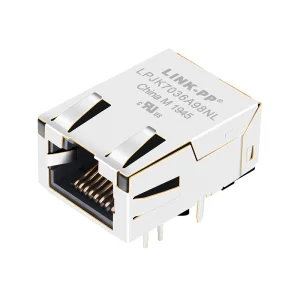
Discover our high-speed transceiver modules, EMI-shielded cage enclosures, and high-density RJ45 connectors designed for scalable rackmount systems.
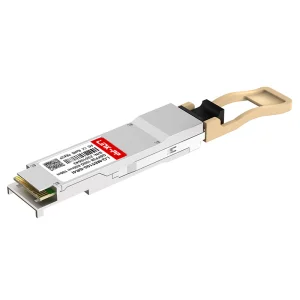
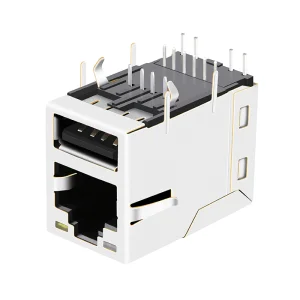
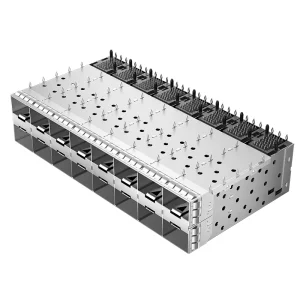
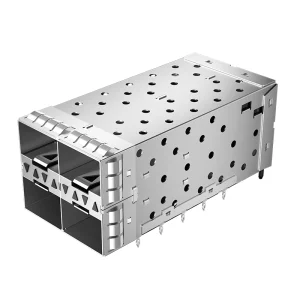
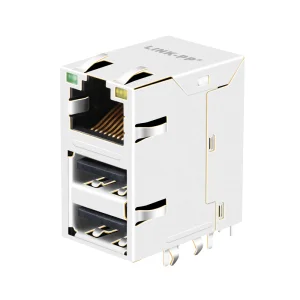
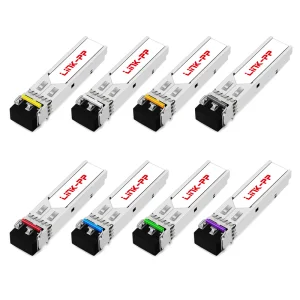
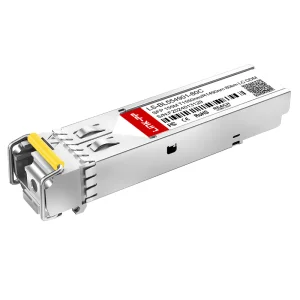
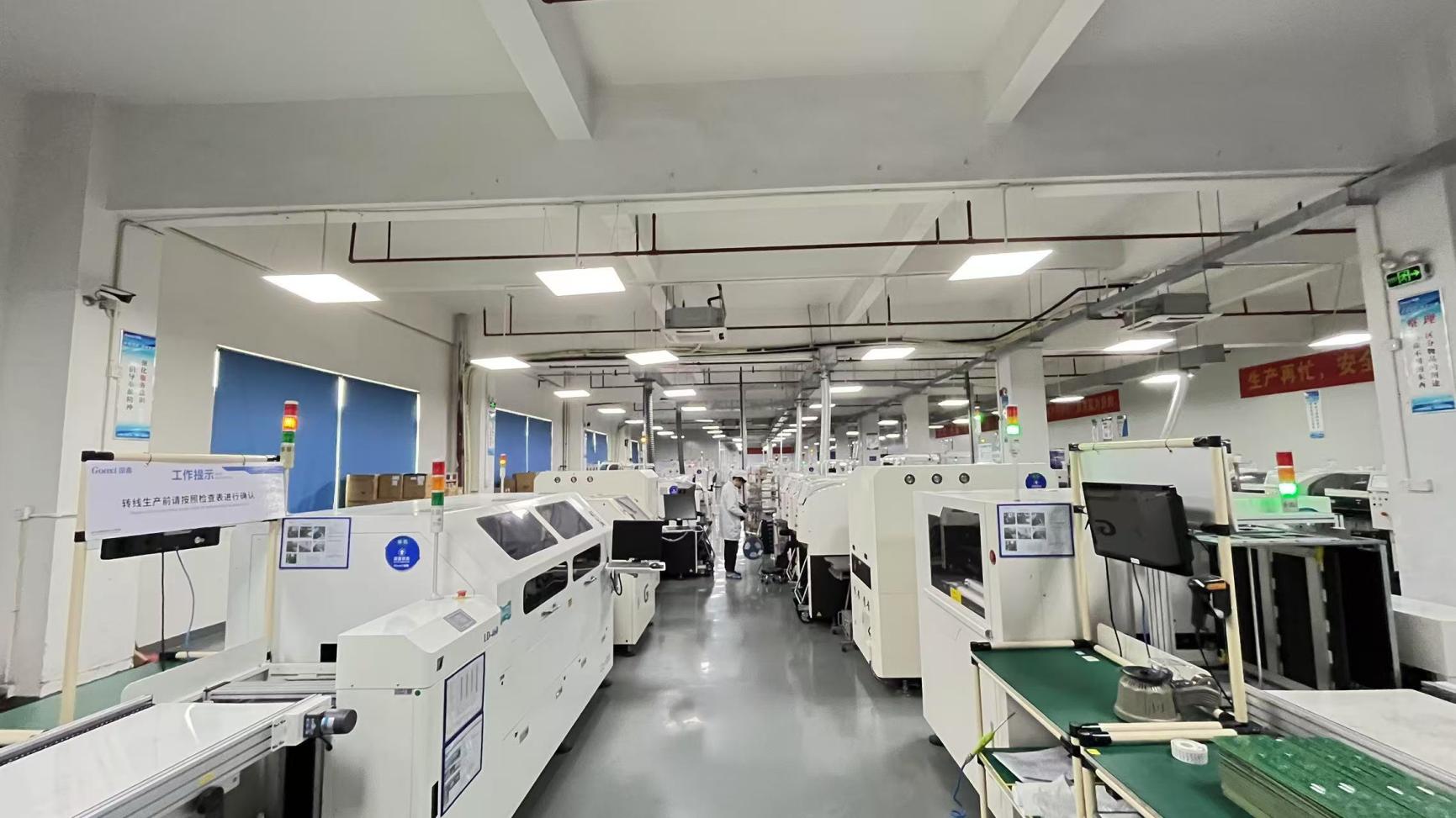
We implement dust-free cleanrooms, automated pick-and-place equipment, and optical alignment stations to ensure consistent performance at scale.