Lumetra
Lumetra
Lumetra
Premium OEM & replacement parts optimized for telecom grids, data center backbones, and server chassis applications
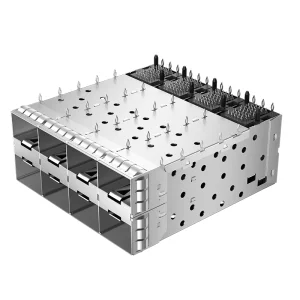
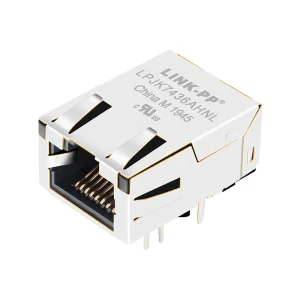
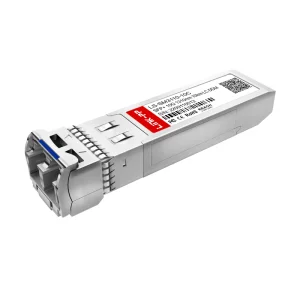
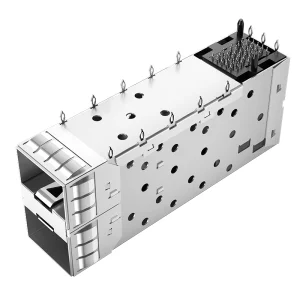
Founded in 2016, Lumetra Optoelectronics Technologies Co., Ltd. has engineered a prestigious reputation as a professional manufacturer specializing in high-speed optical transceivers and fiber optic communication solutions. Designed to support datacom, telecom, and cloud infrastructure applications globally, our capabilities merge advanced optical engineering with scaled, quality-controlled industrial assembly processes.
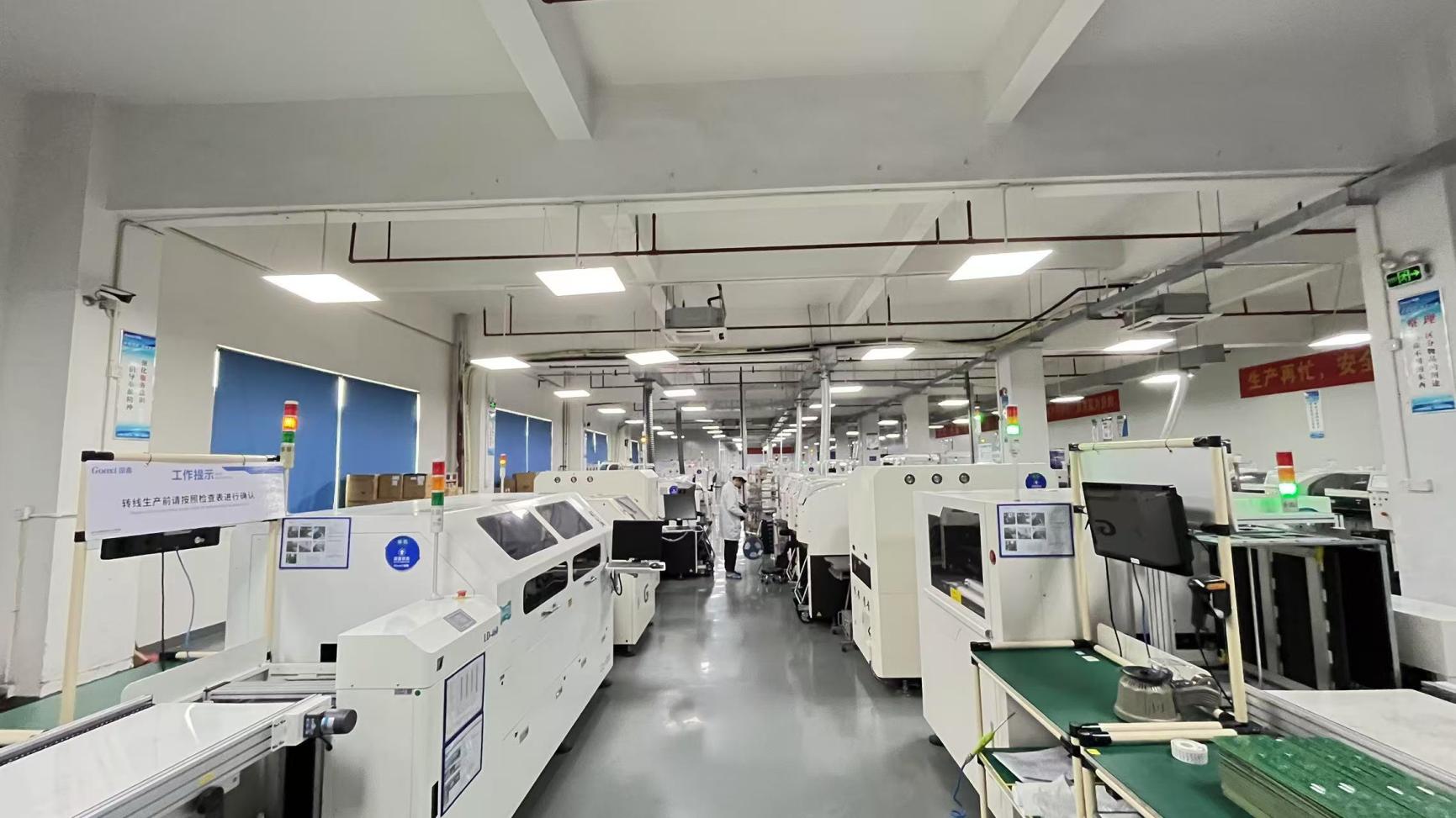
Equipped with 11 years of overall industry expertise and 7 years of direct global export experience, Lumetra operates a state-of-the-art production facility covering approximately 8,500㎡. We manage an active, dynamic supply ecosystem with over 1,200 supply chain partners to guarantee uninterrupted component sourcing, allowing our annual export revenue to consistently scale, currently reaching around USD 18 million.
Our core mission is to empower global telecom carriers, system integrators, hyperscale data center operators, and optical network equipment brands with standard-compliant, extremely reliable transceivers and physical interfaces that achieve high signal integrity and minimized optical insertion loss.

Understanding optical pathways, dispersion limitations, and Multi-Source Agreement (MSA) standards
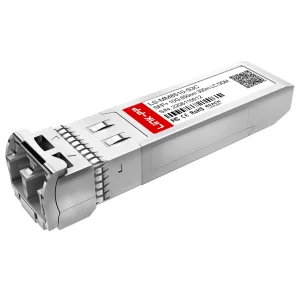
Single Mode SFP (Small Form-factor Pluggable) modules represent the backbone of medium-to-long-range digital data transmission. Unlike Multi-Mode systems that allow multiple light ray trajectories (modes) to propagate down the fiber core, a Single Mode Fiber (SMF) core has an extremely narrow diameter (typically 9/125 micrometers). This constraint allows only a single optical pathway to guide the light, eliminating modal dispersion—the physical phenomenon where distinct light paths arrive at different times, distorting the signal over long distances.
Single-mode systems primarily deploy optical signals at 1310 nm and 1550 nm. The 1310nm range strikes a perfect balance between minimal dispersion and low attenuation (~0.35 dB/km) in standard G.652 silica fiber, typically applied for reaches between 10 km and 40 km. The 1550nm wavelength band experiences the absolute lowest physical attenuation rate of approximately 0.2 dB/km, making it the preferred wavelength for long-haul networks (up to 80 km or 120 km) utilizing DFB (Distributed Feedback) or EML (Electro-absorption Modulated) lasers.
In line with the SFF-8472 Multi-Source Agreement, advanced single-mode modules manufactured by Lumetra incorporate built-in digital diagnostic monitoring interfaces. DDM provides system administrators with real-time operational metrics including:
| Parameters | Single Mode Transceiver (SMF) | Multi-Mode Transceiver (MMF) |
|---|---|---|
| Core Diameter | 9 μm | 50 μm / 62.5 μm |
| Primary Wavelengths | 1310 nm / 1550 nm (and CWDM/DWDM spectrums) | 850 nm / 1300 nm |
| Light Source Type | Laser Diode (DFB, FP, or EML) | VCSEL (Vertical-Cavity Surface-Emitting Laser) or LED |
| Maximum Link Budget Distance | 10 km up to 120 km (Long-haul, Metro infrastructure) | Up to 300 m - 550 m (Intra-cabinet, Short-range server rooms) |
| Dispersion Factor | Chromatically limited (extremely low modal dispersion) | Modally limited (high dispersion over distance) |
| Typical Applications | Carrier WAN, FTTH/GPON, Core Network Switches | Data Center SANs, Local Enterprise LAN aggregation |
How China's industrial clustering accelerates production, optimizes component sourcing, and mitigates logistics risk
China remains the premier global hub for optical transceiver fabrication. The resilience of China's optical supply chain does not rely solely on competitive labor pricing; instead, it is driven by deep vertical integration and geographic grouping of specialized material suppliers.
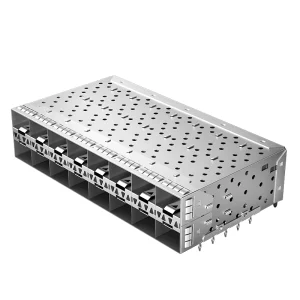
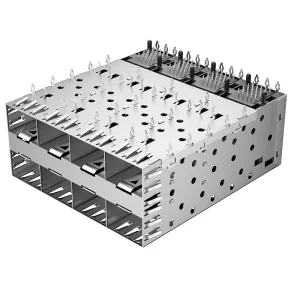
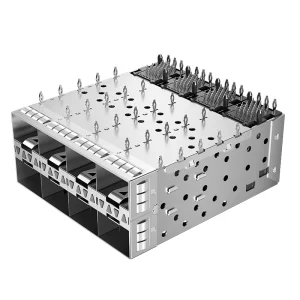
At Lumetra, we manage component acquisition across a network of more than 1,200 trusted supply chain partners. This clustering ensures that crucial raw components—such as optical sub-assemblies (TOSA/ROSA), high-frequency PCBs, laser driver ICs, premium lenses, and metal SFP cages—are sourced locally within a minimal geographic radius.
Because of our integrated logistics, our 86 R&D engineers can execute fast cycles of design verification. Last year alone, we introduced 220 new products, bridging custom firmware protocols, tuning laser wavelengths, adapting power supply rails, and developing novel SFP cage architectures.
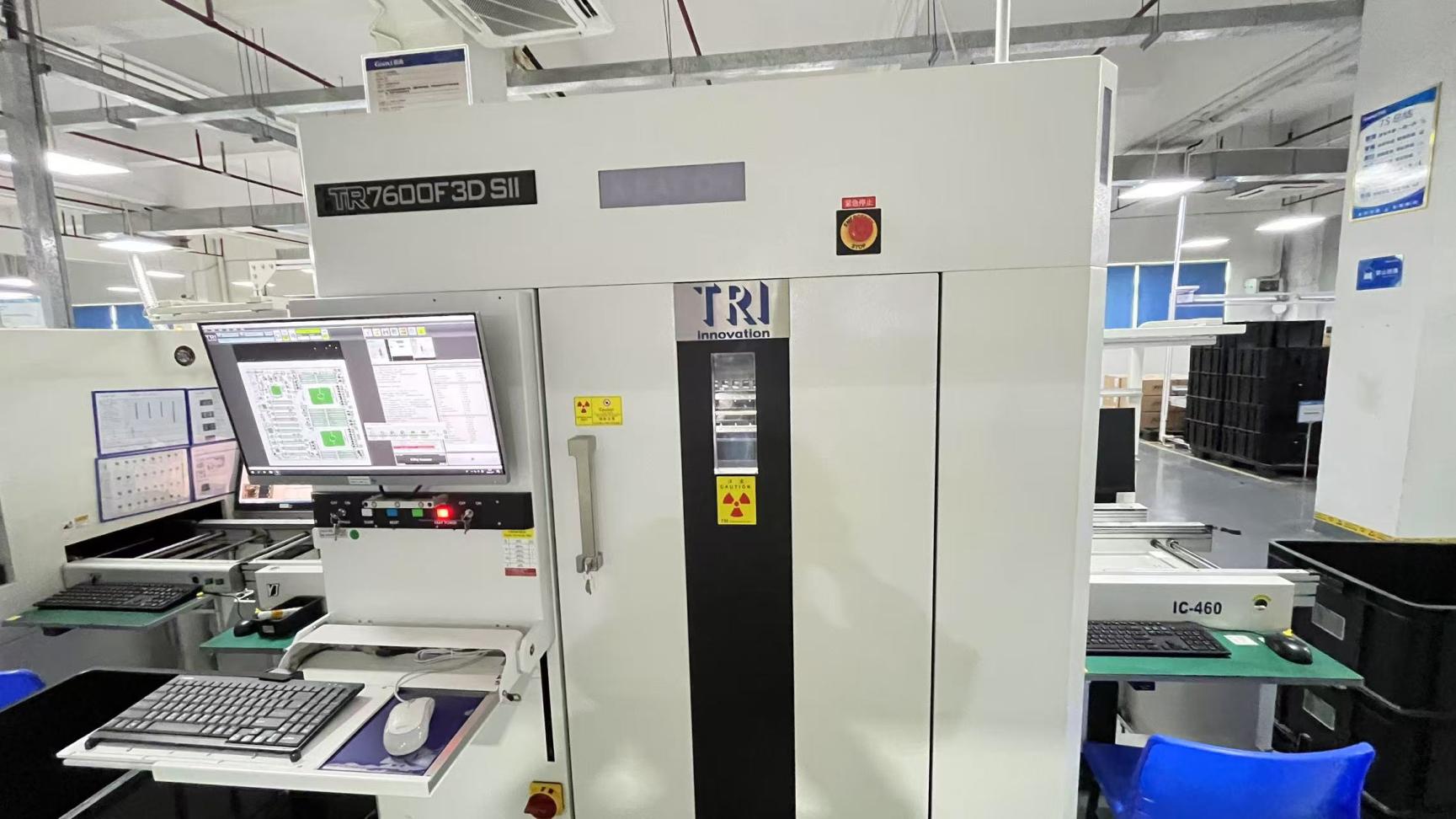
Operating an 8,500 square meter factory floor allows us to utilize high-capacity surface mount technology (SMT) lines and automated optical alignment systems. Automated testing of optical eye diagrams and multi-temperature calibration reduces cycle time while scaling output to handle volume demands.
By warehousing critical optoelectronic materials locally and maintaining active redundancy with multiple verified component makers, we insulate buyers from global market price spikes. This localized resilience is reflected in our robust annual export revenue of USD 18 million.
Adapting optical networks to match strict environment-specific network architectures and operational parameters
Inside cloud core setups, single mode SFP/SFP+ transceivers interface directly with top-of-rack (ToR) and leaf-spine switches. They transmit high-throughput, low-latency traffic over ranges spanning from 1 km to 10 km. SFP-10G-LR compatible modules, paired with robust EMI shielded cages, prevent packet collisions and high bit-error rates caused by dense electromagnetic radiation inside modern server racks.
Telecommunications operators deploy single mode optics for Gigabit Passive Optical Networks (GPON) and metro-link aggregation. Because single-mode optical fiber suffers minimal attenuation over 20 km to 40 km, it connects dense urban distribution nodes to remote Central Offices. This maximizes bandwidth efficiency without needing expensive inline optical regenerators.
Electrical substations and transportation grids require hardened, industrial-grade transceivers. Operating under extreme temperature swings (-40°C to +85°C), single-mode optical paths bypass EMI interference near high-voltage lines and locomotives. The use of press-fit, shielded cages (such as TE replacement 2x4 and 2x8 port series) protects the active electronics from vibration-induced drift and dust ingress.
The transition from 10G to 400G and the rise of Silicon Photonics (SiPh)
The optical communications market is evolving rapidly. While 10G SFP+ modules remain the workhorses for legacy enterprise networks and local area aggregation, carrier backbones are shifting toward 100G, 400G, and 800G form factors. This migration introduces new engineering requirements at the module level.
Traditional optical modules assemble discrete lasers, optical lenses, and photodetectors onto a single substrate. Silicon Photonics replaces this architecture by integrating these components directly onto a silicon microchip. This reduces power consumption, lowers production complexity, and increases reliability by removing fragile mechanical alignments.
As network bandwidth climbs, traditional pluggable transceivers encounter physical bottlenecks in trace lengths and heat dissipation. Co-Packaged Optics (CPO) resolves these issues by mounting the optical engine directly onto the same multi-chip substrate as the main switch ASIC. This architecture cuts electric trace paths, reducing overall transceiver latency.
To maximize capacity on existing single-mode fiber links, operators are deploying DWDM SFP+ modules. DWDM splits light into narrow bands (down to 50 GHz spacing) to multiplex dozens of distinct optical channels onto a single fiber pair. This allows operators to expand grid bandwidth without needing to lay new cable runs.
How Lumetra ensures 100% interoperability, high signal integrity, and international certification alignment
As an exporter of optical equipment with 11 years of industry experience, Lumetra enforces strict testing protocols. Our quality assurance framework is managed by a team of 48 trained inspectors. They verify that every single-mode transceiver meets our engineering specifications before dispatch.
Every transceiver undergoes automated parameter testing. We measure parameters such as Average Optical Output Power, Extinction Ratio (ensuring clear distinction between logic 1 and 0), Center Wavelength Accuracy, and Receiver Sensitivity across a range of operational states.
We maintain a compatibility lab containing switches, routers, and firewalls from top networking brands. By programmatically matching EEPROM codes, we ensure our modules work plug-and-play with hardware from brands like Cisco, Juniper, Arista, Huawei, and HP.
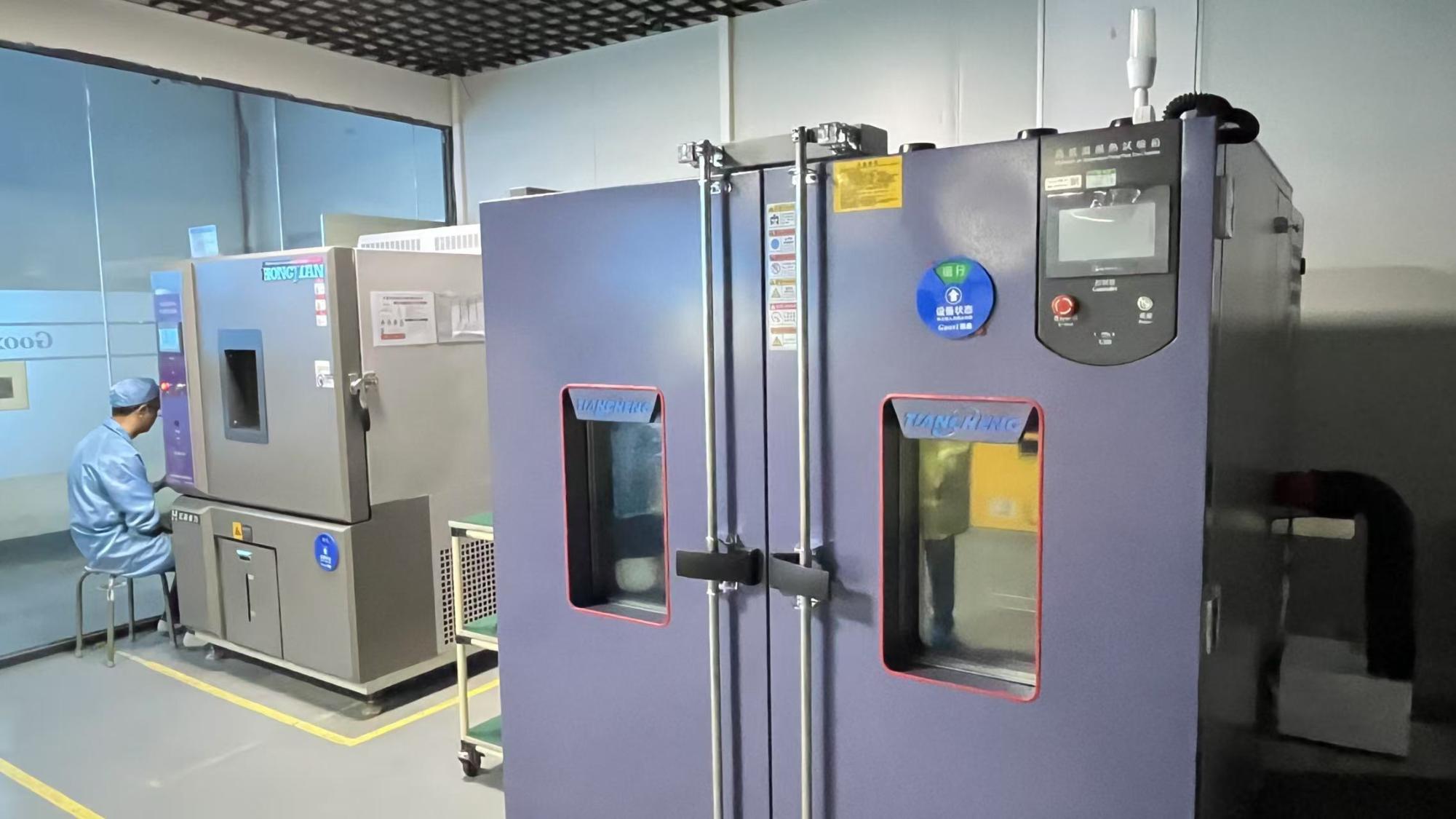
To guarantee long-term reliability in harsh environments, transceivers undergo temperature sweeps inside environmental chambers. They are cycle-tested from -40°C to +85°C to confirm the structural stability of the optical assembly.
Lumetra's manufacturing processes align with recognized safety and environmental standards. We ensure compatibility and regulatory compliance across diverse destination markets through the following qualifications:
Insights on compatibility coding, power budgets, optical reflections, and thermal management
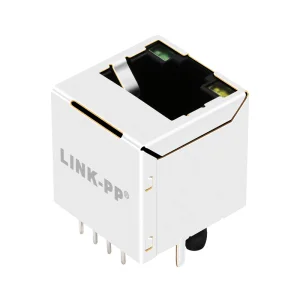
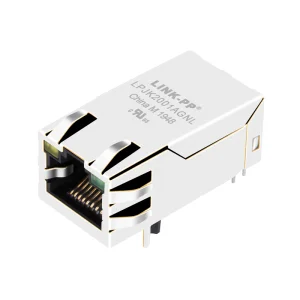
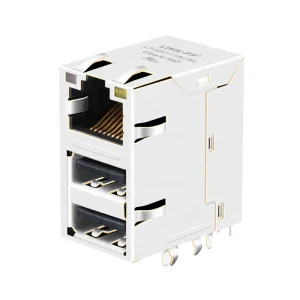
Premium SFP enclosures, low-profile magnetic jacks, and industrial transceivers designed for standard system deployments