Lumetra
Lumetra
Lumetra
Engineered for carrier-grade networking, telecommunication hubs, and enterprise backplanes.
Under the hood of signal integrity, integrated magnetics, and multi-gigabit transport interfaces.
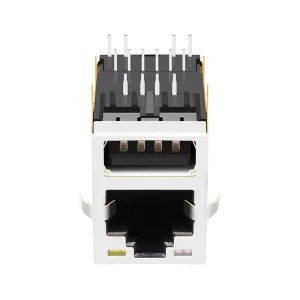
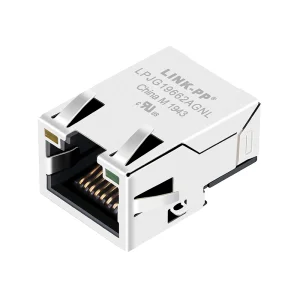
Protects silicon PHY chips from high-voltage transients on the Ethernet line via magnetic coupling. Essential for electrical isolation up to 1500V AC.
Heavy brass or copper alloy shielding prevents external electromagnetic noise from disrupting internal signals while suppressing radiated emissions.
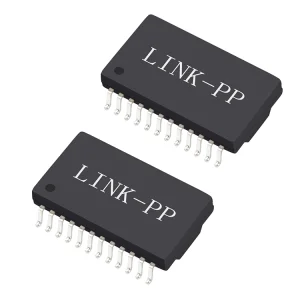
Designed with specific wire-gauge wound cores to handle DC current injection up to 90W (IEEE 802.3bt) without saturating the magnetic cores.
How vertically integrated manufacturing and raw component localization yield cost and lead-time advantages.
Lumetra partners with over 1,200 supply chain partners, enabling direct sourcing of refined magnetic cores, high-quality copper contacts, and custom PCB subassemblies within a tight geographic zone. This reduces transit lag for raw materials.
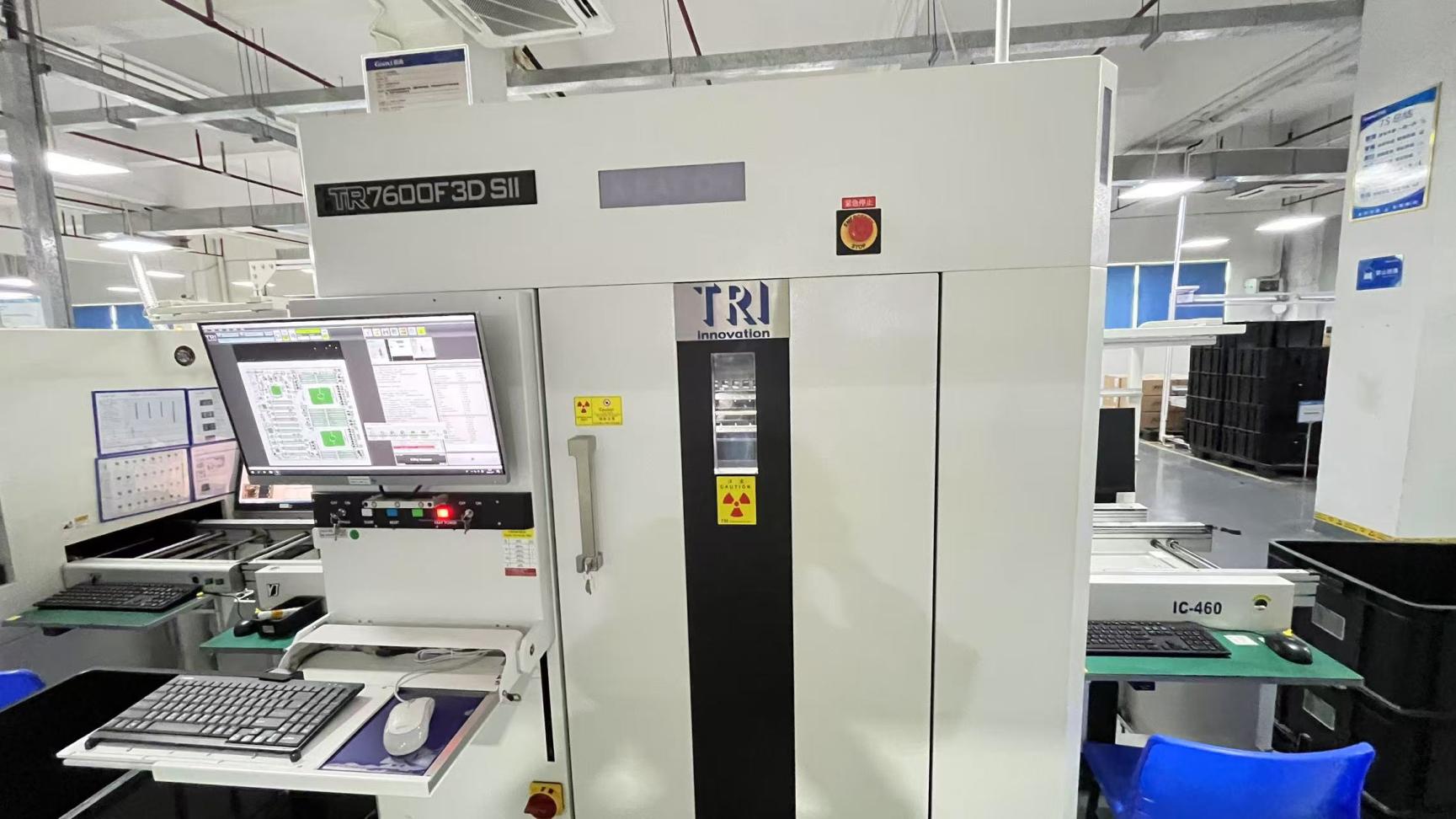
Operating from an 8,500㎡ facility, our production lines utilize state-of-the-art automated optical performance testing, high-speed SMT assembly, and computerized transformer winding to achieve consistent manufacturing tolerances.
Backed by 86 R&D engineers, we offer agile prototyping and custom engineering. We can adapt pin layouts, LED color schemes, internal magnetics configurations, and optical module firmware protocols to match target systems.
Bridging local deployments with high-bandwidth infrastructure worldwide.
To minimize international shipping delays, Lumetra provides custom logistics arrangements, pre-cleared customs documentation for EU, North American, and Middle Eastern markets, and localized field engineering support.
Our engineers collaborate directly with your hardware team to resolve integration challenges, offering physical layout adjustments, custom pinouts, and detailed electromagnetic simulation data.
The path to higher bandwidth, lower latency, and enhanced power delivery.
With the rollout of Wi-Fi 6E/7 and high-bandwidth wireless access points, legacy 1Gbps copper ports are transitioning to 2.5G and 5G speeds. This shift requires RJ45 modules to feature optimized magnetic shielding, minimizing insertion loss and near-end crosstalk (NEXT) up to 250 MHz and 500 MHz frequencies.
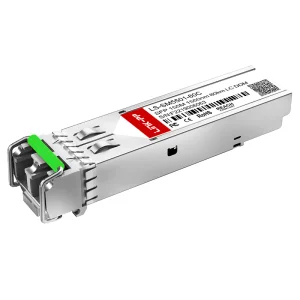
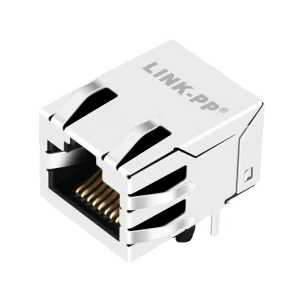
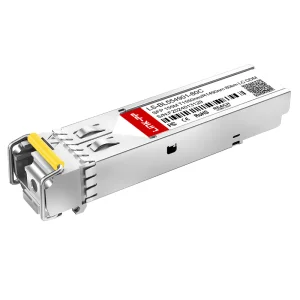
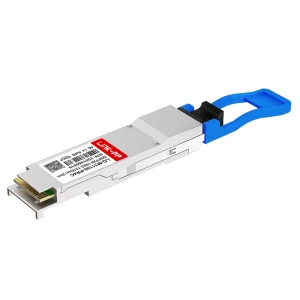
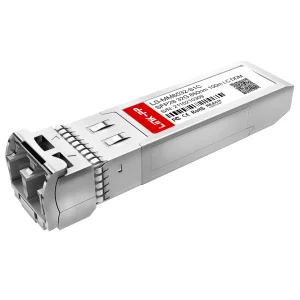
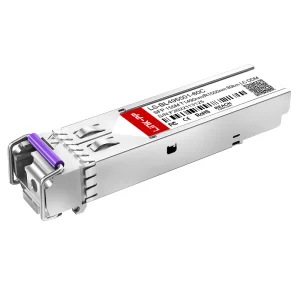
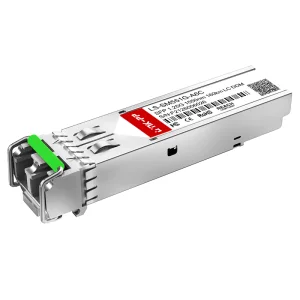
Modern edge networks rely on a combination of optical transceivers for long-haul transmission and copper interfaces for local patching. Lumetra addresses this convergence by supplying both SFP/QSFP optical transceiver modules and integrated RJ45 jacks, simplifying sourcing and component integration for system integrators.
Industrial-grade components built to withstand extreme operating conditions and high transmission loads.
Answers to common technical and regulatory questions for purchasing managers and hardware engineers.
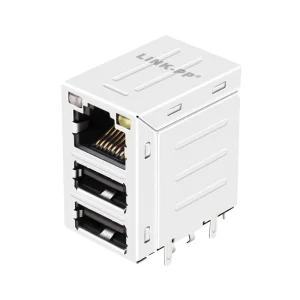
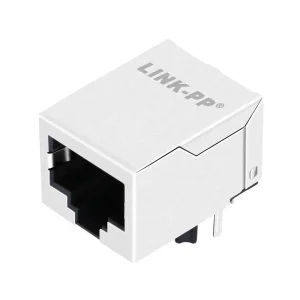
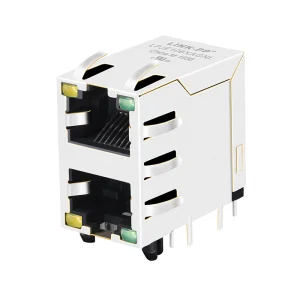
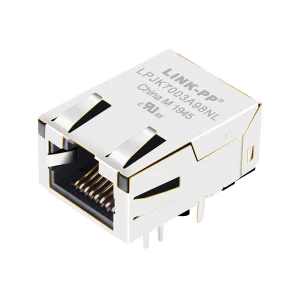
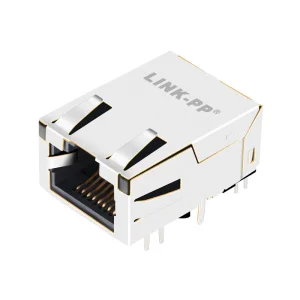
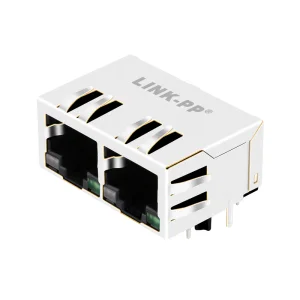
An integrated RJ45 module (often called a Magjack) houses the isolation transformer and common-mode filter cores inside the metal shielding of the connector. This layout improves space efficiency, minimizes PCB track routing issues, and provides better protection against high-voltage surges. RJ45 connectors without magnetics require these components to be laid out separately on the main board, occupying valuable motherboard space.
CE Certification indicates compliance with European Union safety, health, and environmental protection standards. For active or passive components that interface with mains electricity or contain significant electromagnetic circuitry (like PoE modules), CE compliance is mandatory. Our modules undergo rigorous testing for emission levels (EMC Directive) and insulation safety (Low Voltage Directive) to simplify import clearance and system-level validation.
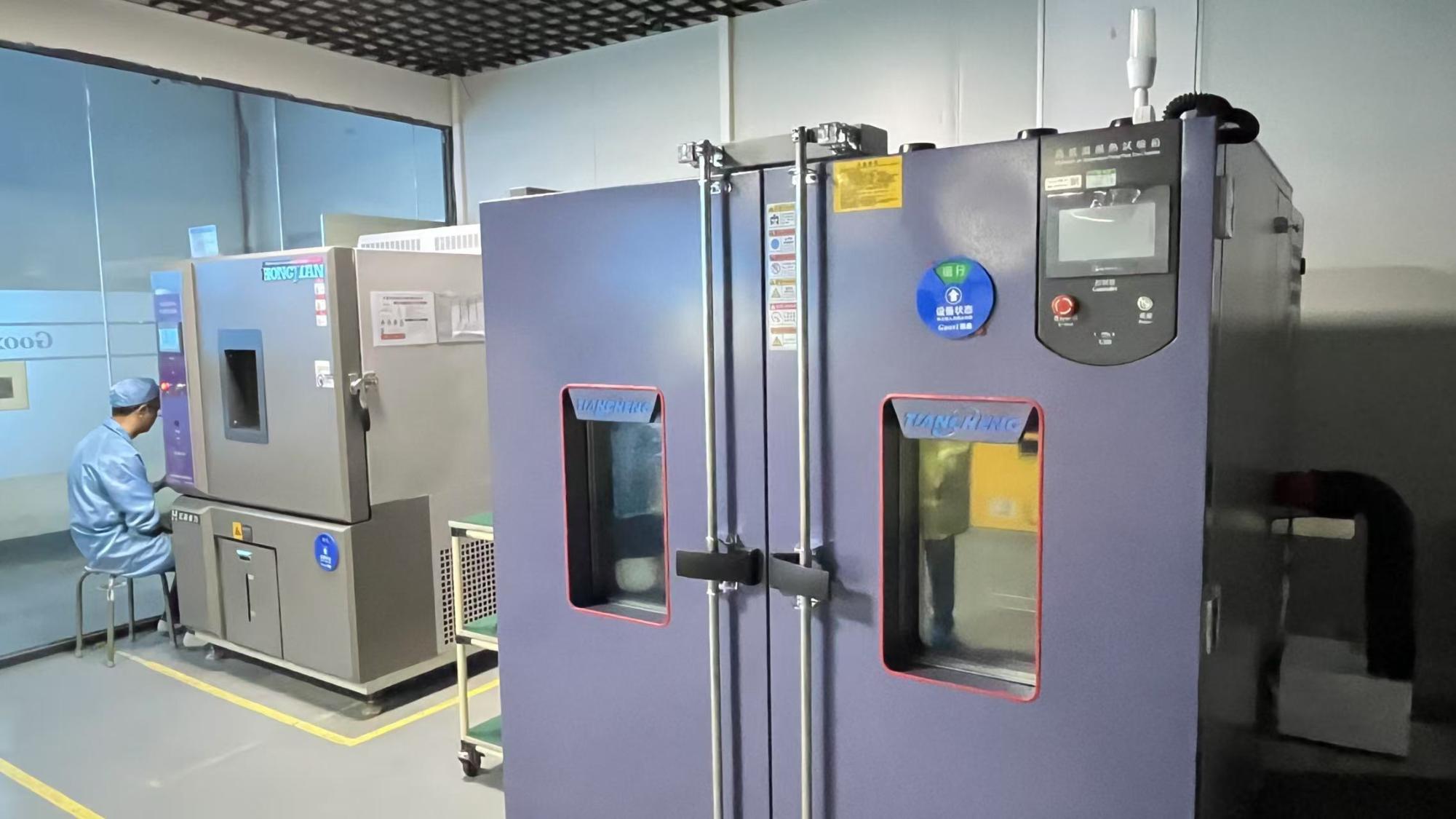
Lumetra employs a multi-tiered verification process. This includes automated optical performance testing (measuring parameters like center wavelength, extinction ratio, and eye diagrams), environmental stress screening (cycling temperature levels to detect infant mortality failures), and manual inspections of optical interfaces. Our 48-inspector QA team ensures that optical modules, telecom transformers, and connectors meet global performance benchmarks.
Yes, our R&D department specializes in custom engineering. This includes writing customized optical firmware to match the host-switch software handshake protocol, wavelength tuning, form factor modifications, and electrical budget optimization. Our engineers can configure SFP, SFP28, and QSFP28 transceivers to integrate with platforms from Cisco, Juniper, Arista, Huawei, and other major networking brands.
Our telecom transformers support standard PoE (IEEE 802.3af, up to 15.4W per port), PoE+ (IEEE 802.3at, up to 30W), and PoE++ (IEEE 802.3bt, up to 90W). They feature dual-core magnetic pathways designed to handle DC bias current without saturation, preventing packet drop and signal degradation during active power transmission.