Lumetra
Lumetra
Lumetra
Reliable components designed for high-density, low-latency applications
As datacenters scale to handle massive computational loads from AI, machine learning, and high-frequency transactions, the demand for stable, high-throughput, and energy-efficient interconnects has never been more critical. Lumetra Optoelectronics Technologies Co., Ltd. stands at the forefront of this technological shift. Established in 2016, we have grown into a premier manufacturer specializing in high-speed optical transceivers and fiber optic communication solutions designed for modern datacom, telecom, and cloud infrastructure applications.
With 11 years of deep industry expertise and 7 years of global export experience, we bridge the gap between high-level engineering and scalable manufacturing. We provide flexible OEM and ODM services, tailoring transceiver logic, form factors, and wavelengths to fit complex, multi-platform environments.
Uncovering the core needs of enterprise network engineers and procurement leads
Network environments are heterogeneous. One of the primary risks for system integrators is vendor lock-in and high compatibility failure rates. Lumetra resolves this by utilizing custom EEPROM microcode programming, ensuring 100% compatibility with Cisco, Juniper, Arista, HP, and other top-tier network hardware brands.
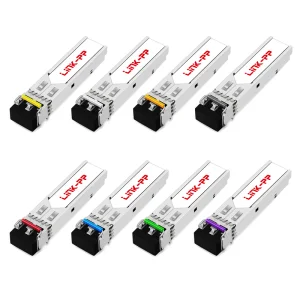
Higher port densities generate excessive heat. Our multi-mode SFP modules are designed with specialized low-power architectures (often less than 0.8W per module), significantly lowering cooling demands and reducing the overall carbon footprint of large data centers.
With volatile lead times across the semiconductor industry, securing a stable supply is vital. Lumetra operates with a robust supply network of over 1,200 partners. This ensures that critical materials, from VCSEL lasers to photodetectors and PCB substrates, are constantly in stock to satisfy major rollouts.
The progression of short-reach optical links from legacy 1G to next-generation high-speed standards
Vertical-Cavity Surface-Emitting Lasers (VCSEL) operating at the 850nm window remain the cornerstone of short-reach, cost-effective high-speed networks. The introduction of OM3, OM4, and Wideband Multimode Fiber (OM5) has extended the performance capabilities of multimode SFP modules:
As bandwidth demands climb toward 400G and 800G, traditional Non-Return-to-Zero (NRZ) modulation transitions into PAM4 (Four-Level Pulse Amplitude Modulation). Lumetra’s R&D department is continuously engineering transceiver sub-assemblies to optimize Signal Integrity and reduce Bit Error Rates (BER) at the physical layer.
We focus heavily on reducing insertion loss and dispersion effects, ensuring that when upgrading from legacy speeds (1.25G, 10G) to modern high-density channels, infrastructure managers do not need to replace their existing physical fiber backbones prematurely.
Tailored connectivity deployment across key infrastructure verticals
In hyperscale facilities where millions of virtual machines exchange internal "East-West" traffic, multi-mode SFP modules provide the most economical, lowest-latency path. Our 850nm MMF transceivers offer the sub-nanosecond processing required to prevent packet queues and buffer overruns in massive computing clusters.
Connecting building distribution nodes to core network centers requires resilient, EMI-immune connections. Utilizing Lumetra’s dual-fiber MMF modules ensures a stable 1Gbps to 10Gbps link that operates over existing campus fiber ducts without needing the costly transceivers associated with single-mode setups.
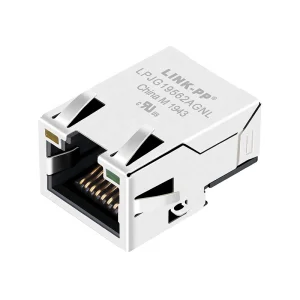
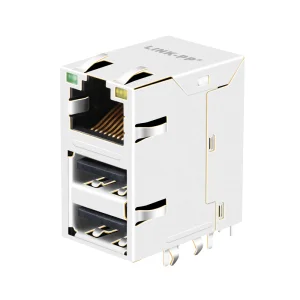
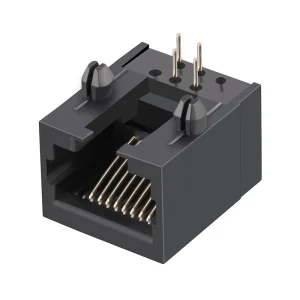
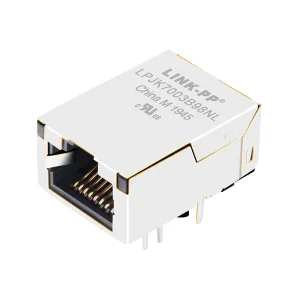
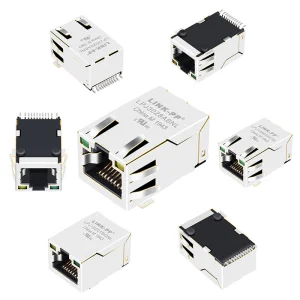
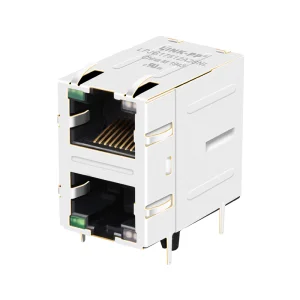
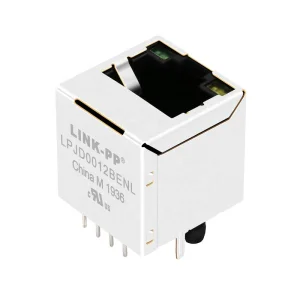
Industrial ethernet setups demand high physical durability. Along with our SFP modules, our shielded RJ45 modular jacks and low-profile vertical connectors are integrated into industrial switches and embedded boards, sustaining continuous performance under fluctuating temperatures and high vibrational stress.
Key architectural specifications for network system design
| Module Class / Standard | Wavelength (nm) | Fiber Core / Type | Max Reach | Connector Interface | Typical Target Application |
|---|---|---|---|---|---|
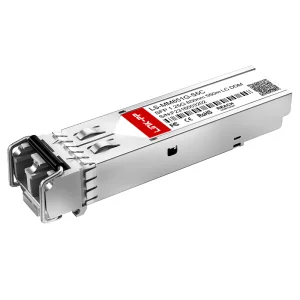
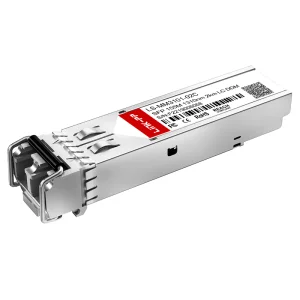
| 1000BASE-SX SFP | 850nm | Multimode (OM3/OM4) | 550 meters | Duplex LC | Gigabit Ethernet Access / Aggregation |
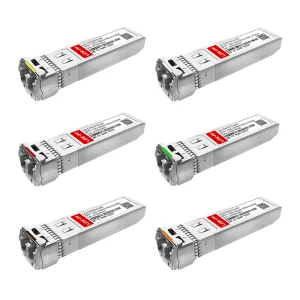
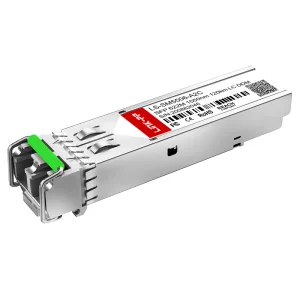
| 10G CWDM SFP+ | 1270nm - 1610nm | Single Mode (SMF) | 40 km | Duplex LC | Metro Networks & Wavelength Multiplexing |
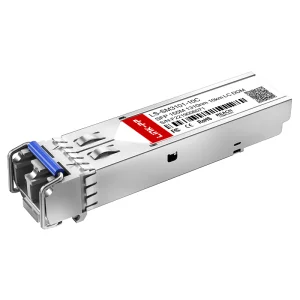
| 100BASE-LX SFP | 1310nm | Single Mode (SMF) | 10 km | Duplex LC | Fast Ethernet Long-Reach Links |
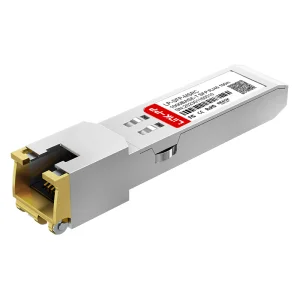
| 1000BASE-T Copper SFP | N/A (Electrical) | Cat5e / Cat6 Copper | 100 meters | RJ-45 | Short-reach Switch-to-Server Uplinks |
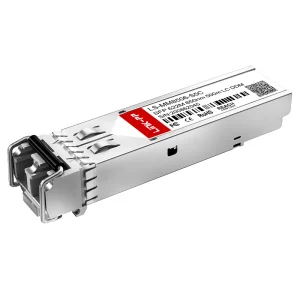
| 622M MMF SFP | 850nm | Multimode (OM2/OM3) | 500 meters | Duplex LC | SDH/SONET & Legacy Telecom Interfaces |
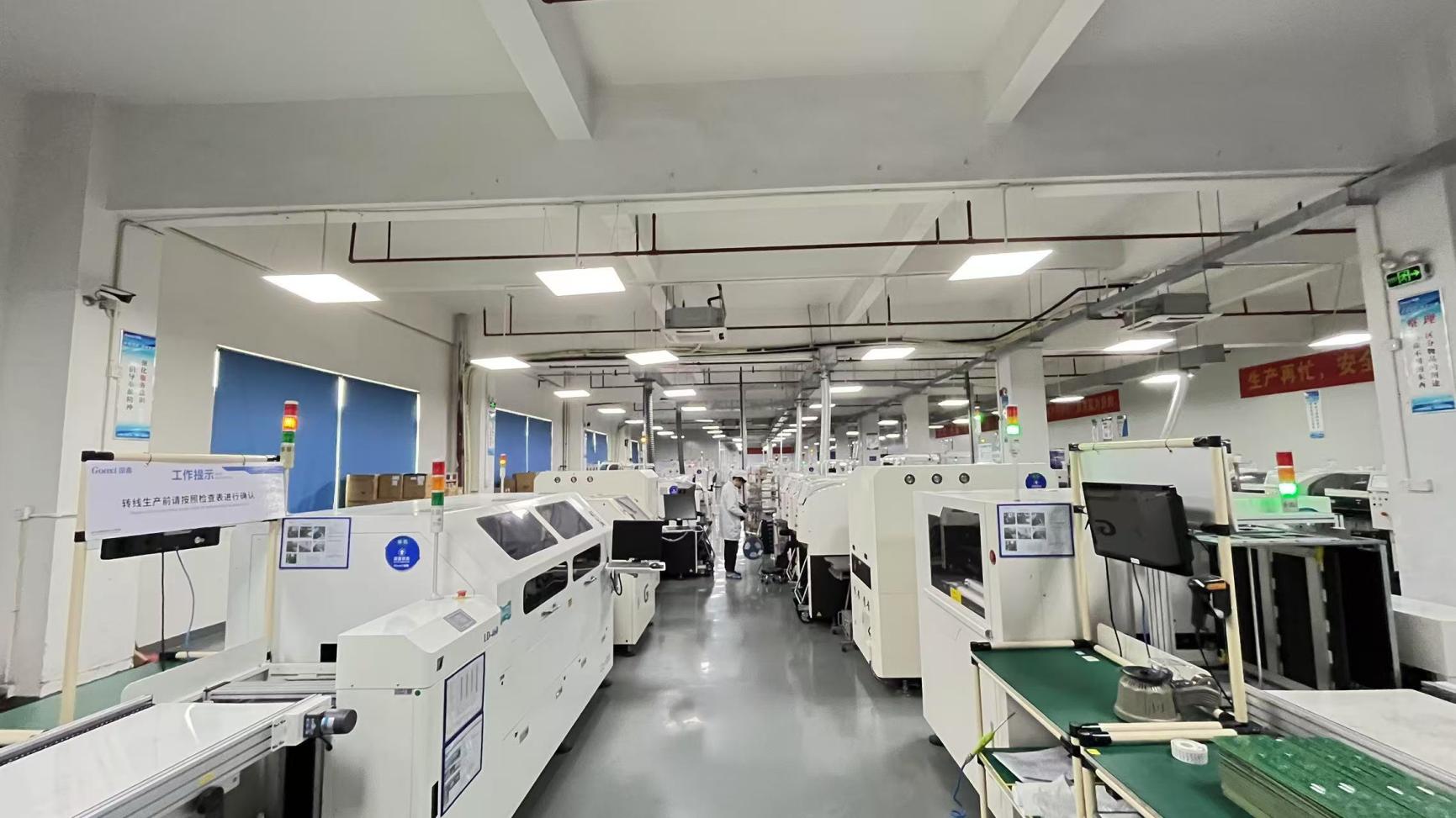
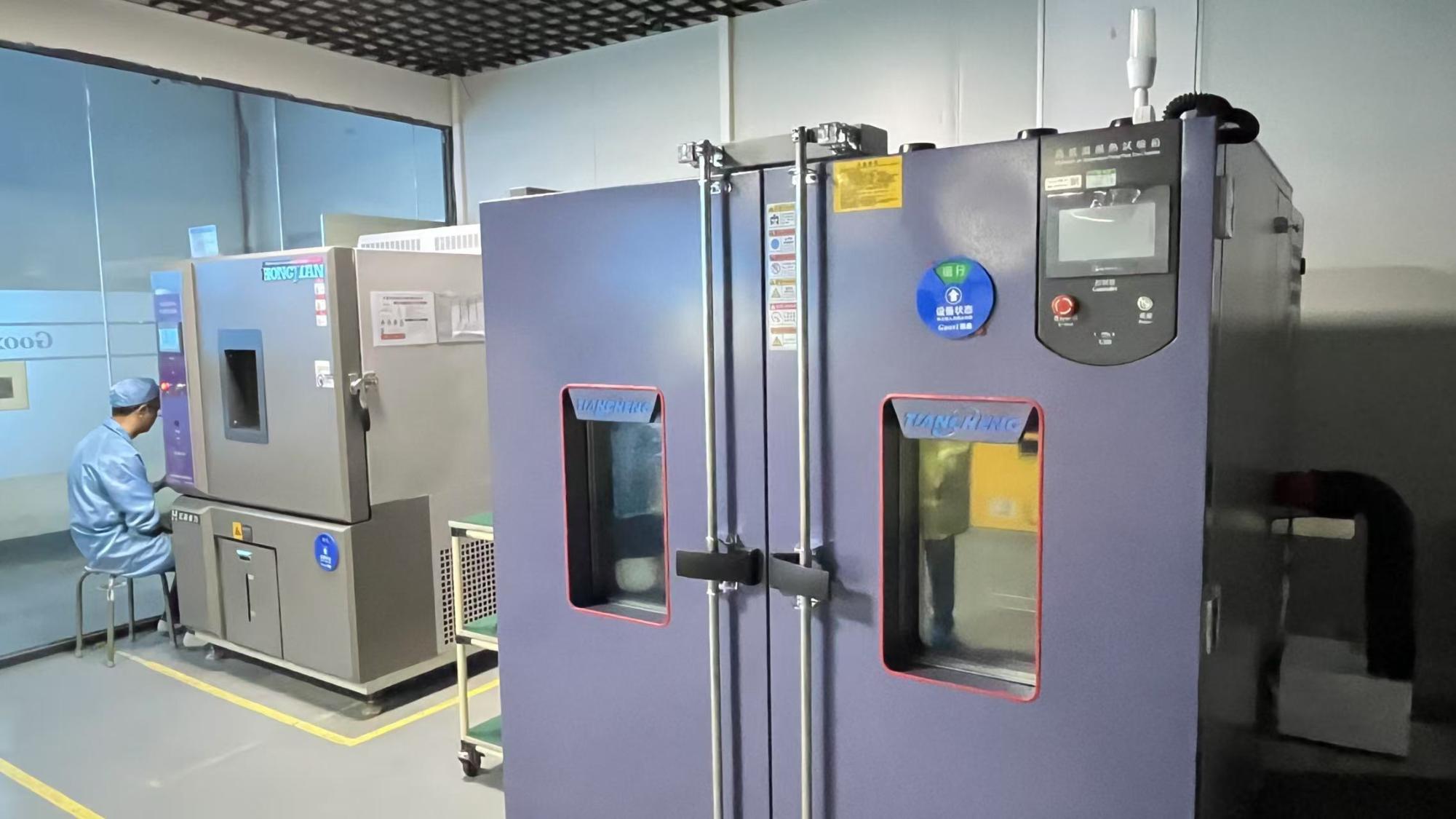
At Lumetra, quality assurance is not a secondary phase; it is embedded into every layer of our production. Operating within our 8,500㎡ facility, our testing protocol involves a combination of automated optical performance testing, environmental stress screening, and rigorous manual inspection.
Our specialized QA department comprises 48 highly trained inspectors who oversee the production flow to guarantee zero-defect shipments. Every SFP transceiver is individually tested on actual target switches to verify optical power output, receiver sensitivity, and real-world signal integrity before packaging.
This commitment to reliability is why telcos, cloud integrators, and equipment brands in North America, Europe, Southeast Asia, and the Middle East trust Lumetra.
Bridging custom specifications with high-volume, reliable output
Innovation drives the telecom sector forward. With 86 skilled R&D engineers, Lumetra provides complete OEM and ODM customization services. We support tailored projects including custom protocol compatibility profiles, firmware modification, wavelength tuning, mechanical form factor adaptations, and electrical power optimization.
In the past year alone, our engineering team launched approximately 220 new products, keeping our customers ahead of evolving network trends and new equipment specifications.
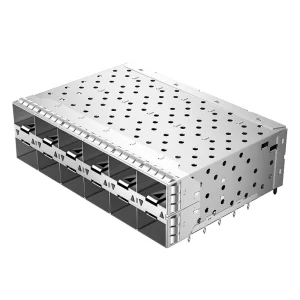
Whether you require a highly specific light pipe configuration on an SFP+ cage or custom optical characteristics for legacy multimode installations, our engineering team delivers rapid prototyping and structured qualification testing.

Ensuring smooth import processes, regulatory compliance, and localized integration support
All Lumetra optical transceivers, RJ45 modular jacks, and passive copper cages comply with international standards. We maintain strict compliance with RoHS, CE, FCC, and REACH directives, ensuring frictionless customs clearance and straightforward compliance approval for municipal and enterprise projects.
Our support teams collaborate directly with your local system integrators to pre-configure and catalog SFP microcode. This eliminates compatibility friction at the deployment site, letting technicians plug and play without manual firmware flashing.
Leveraging our supply chain of over 1,200 vetted partners, we buffer critical components to secure steady manufacturing runs. This ensures that even during unexpected logistics bottlenecks, our deliveries remain on schedule.

Answering critical deployment questions for senior network architects and buyers
Compatibility failures typically occur due to vendor-specific EEPROM coding locks on host switches. Many manufacturers program host ports to only accept transceivers containing specific cryptographic keys or manufacturer identifiers. Lumetra avoids this lock-in by maintaining an extensive database of major switch protocols. We program our SFP modules with customized EEPROM microcode to replicate native transceivers, ensuring seamless interoperability, accurate DDM (Digital Diagnostic Monitoring) readings, and zero port lockouts.
Multi-mode fiber (MMF) uses a wider core diameter (typically 50µm or 62.5µm), causing modal dispersion which limits optical distance to relatively short runs (up to 550m for 1.25G networks over OM3/OM4). Single-mode fiber (SMF) has a much narrower core (approx. 9µm), allowing a single light path to travel long distances with minimal dispersion. Lumetra manufactures multi-mode modules for short-range cost efficiency, and single-mode modules (e.g., 10G CWDM SFP+ 40km, 100BASE-LX 10km, and 1550nm 120km) to support long-haul and backhaul requirements.
DOM (or DDM) allows network operators to monitor real-world operational parameters of the SFP module in real-time. This includes key diagnostics such as optical output power, receiver input power, laser bias current, internal module temperature, and supply voltage. By leveraging DOM data, network administrators can proactively detect optical degradation, locate physical line faults, and schedule predictive maintenance before a network link drops completely.
For hardware layouts requiring specialized components, we customize passive interconnects like RJ45 modular jacks, SMT connectors, and SFP+ cages. We adapt parameters such as shielding configurations, LED layouts, light pipe counts, mounting designs (Press-Fit or Solder), and integrated magnetic specifications. This ensures our mechanical interfaces fit securely onto our customers' custom PCBs and network appliance housings.
Precision-engineered physical interfaces and long-reach transceivers